
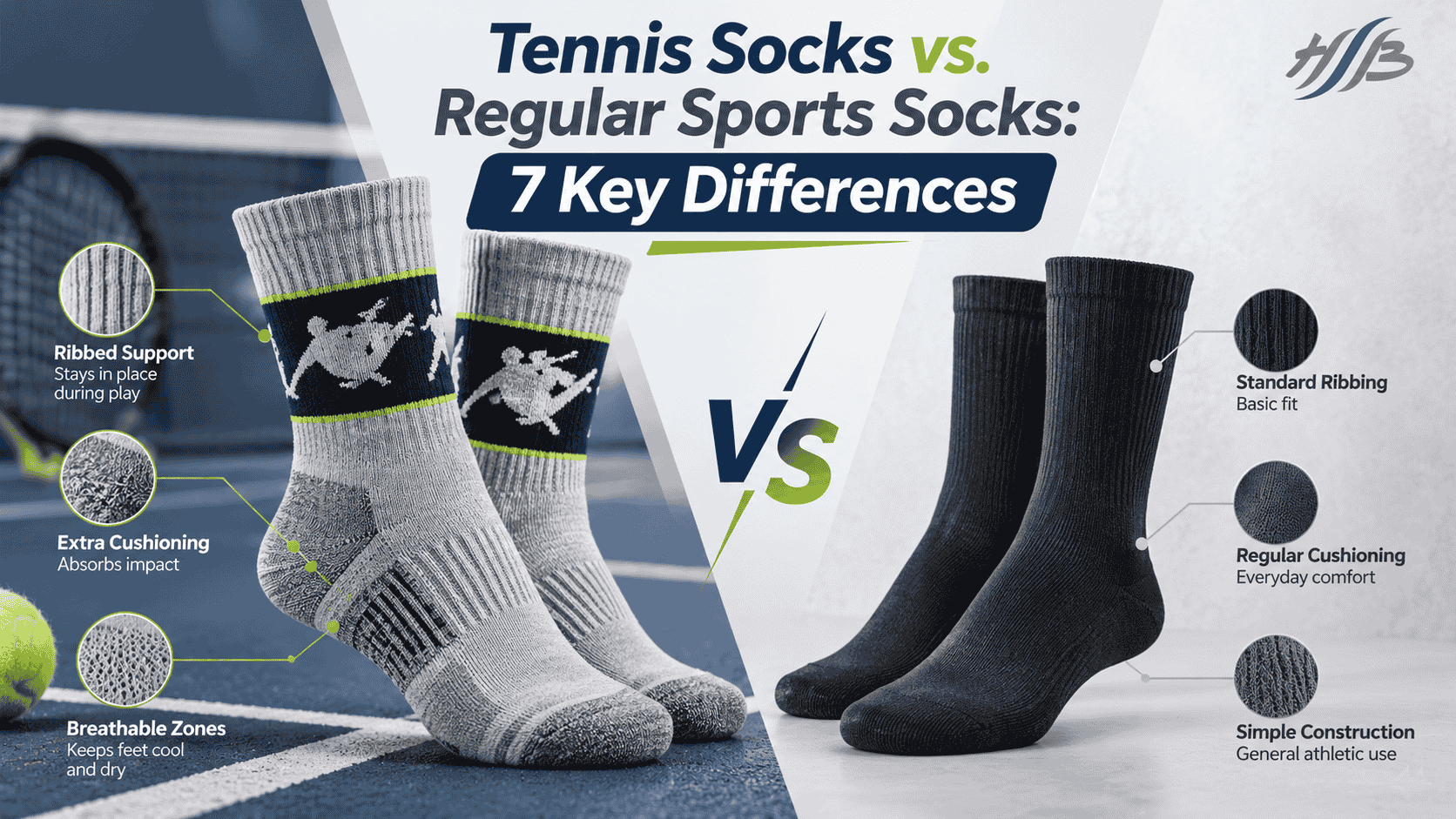
Choosing the right socks can improve comfort and performance during sports. While tennis socks and regular sports socks may look similar, they have different features and uses. Tennis involves quick movements, sudden stops, and frequent changes in direction, while regular sports socks are often designed for activities like walking, gym workouts, and everyday exercise.
Understanding the differences between tennis socks vs. regular sports socks helps athletes choose the right fit, cushioning, and materials for their needs. It also helps brands and manufacturers develop quality athletic socks for different sports. At HSB Textile Sourcing, businesses can explore sports socks sourcing and manufacturing solutions based on their specific requirements.
1. Cushioning and Padding
One of the main differences between tennis socks and regular sports socks is cushioning. Tennis players make quick movements, jump, and stop suddenly during matches. These activities place repeated pressure on the feet.
Cushioned tennis socks often include extra padding around the heel, toe, and ball of the foot. This cushioning improves comfort and helps reduce friction inside tennis shoes. Some designs use terry-loop knitting to provide additional softness.
Regular sports socks may have light or full cushioning, depending on their purpose. However, basic athletic socks may not provide padding in the areas needed for tennis.
For players who spend long hours on the court, targeted cushioning can be particularly useful.
2. Foot Support and Stability
Tennis requires frequent sideways movements, quick turns, and sudden changes in direction. Performance tennis socks are designed to provide a secure fit and better foot stability during these movements. Many tennis socks feature elastic arch bands and fitted midfoot sections that help keep the fabric in place, reduce slipping, and improve comfort during long matches.
Regular sports socks may also offer support, but general-purpose designs often focus on everyday comfort rather than tennis-specific movements. Well-fitted tennis socks help reduce bunching and friction inside shoes. For brands and manufacturers, choosing quality sports socks with the right materials and fitting features is important for performance and comfort.
3. Moisture-Wicking and Breathability
Sweaty feet can make sports activities uncomfortable, especially during long tennis matches. Moisture control is therefore an important feature of quality tennis socks.
Moisture-wicking tennis socks often use polyester, nylon, or blended fibers to move sweat away from the skin. Breathable knitting patterns and mesh panels may also improve airflow.
Regular sports socks can provide similar moisture management, particularly when designed for running or intense workouts. However, basic cotton-rich sports socks may absorb sweat and remain damp longer.
For warm-weather tennis, breathable materials and quick-drying fabrics help maintain comfort throughout the match.
4. Durability and Reinforced Areas
Tennis players frequently push against their shoes while moving across the court. This creates friction around the heels, toes, and sides of the feet.
High-quality tennis socks often feature reinforced heels and toes to improve resistance to wear. Nylon and polyester blends are popular because they offer strength and durability.
Regular sports socks can also be durable, but their reinforcement may vary depending on the sport and product design.Manufacturers use suitable yarns, strong knitting structures, and reinforced sections to produce durable athletic socks.
For brands developing custom socks, material selection plays an important role. Learn more about choosing the best yarn for socks manufacturing.
5. Fit and Friction Protection
A secure fit is important in tennis because repeated foot movement can cause socks to shift inside shoes.Tennis socks are often designed with shaped heels, elastic cuffs, and smooth toe seams. Some premium designs also have separate left and right foot construction for a closer fit.
These features can help reduce rubbing and improve comfort during fast movements.
Regular sports socks may offer a more general fit suitable for several activities. While they can work for casual tennis, loose-fitting socks may bunch or slide during intense matches.The best socks for tennis should fit comfortably without feeling too tight or restricting movement.
6. Sock Length and Design
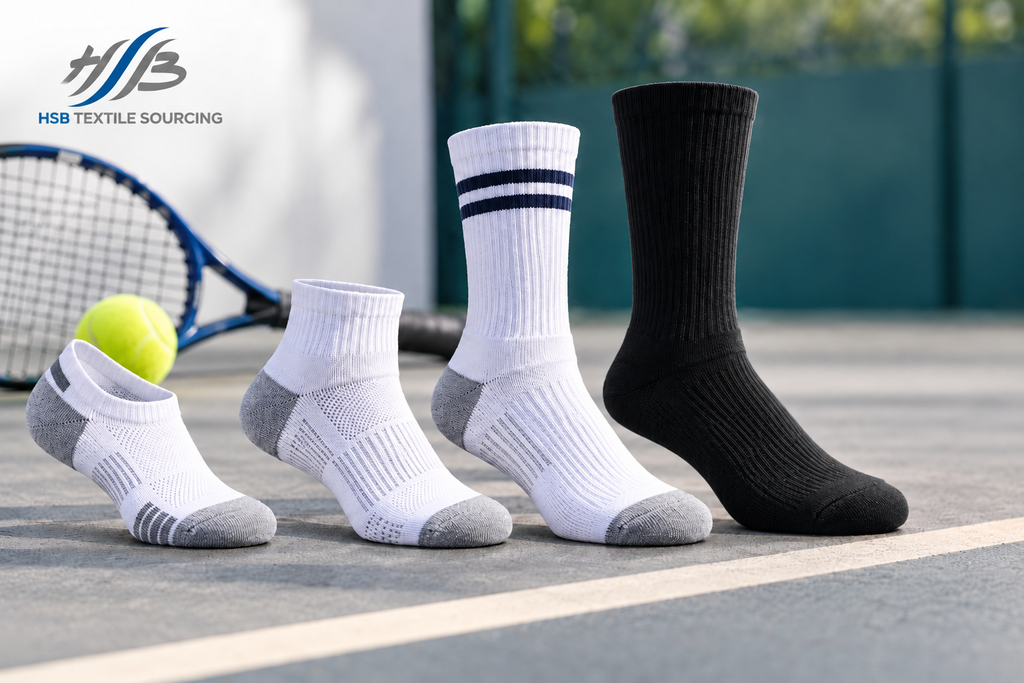
Tennis socks are available in different lengths, including crew, quarter, ankle, and no-show styles.
Crew-length tennis socks are popular because they provide coverage around the ankle and lower leg. Quarter socks offer moderate coverage, while ankle and no-show styles provide a shorter appearance. Regular sports socks are also available in these lengths, so height alone does not determine whether a sock is suitable for tennis.
The main difference is how the length works with the shoe and playing conditions. Some shorter tennis socks include heel tabs to reduce rubbing at the back of the shoe. Players should choose a sock length that matches their footwear, comfort preferences, and playing style.
7. Material Composition and Performance
Material selection affects the comfort, durability, and performance of both tennis socks and regular sports socks.
Tennis socks commonly use cotton blends, polyester, nylon, and elastane. Polyester supports quick drying, nylon provides abrasion resistance, and elastane improves stretch and shape retention.
Cotton offers softness and comfort but can retain moisture during intense physical activities.
Regular sports socks may use similar materials, although the fiber composition often changes based on their intended purpose.
For sports socks manufacturing, selecting the right fabric blend helps brands balance moisture management, comfort, flexibility, and durability.
Tennis Socks vs. Regular Sports Socks: Quick Comparison
| Feature | Tennis Socks | Regular Sports Socks |
| Cushioning | Often targeted at pressure areas | Varies from light to full |
| Foot support | Designed for secure court movement | Depends on activity |
| Moisture control | Often uses wicking materials | Varies by fabric |
| Durability | Frequently reinforced in high-wear areas | Depends on construction |
| Fit | Often shaped and secure | General or sport-specific |
| Length | Crew, quarter, ankle, no-show | Similar length options |
| Materials | Performance blends are common | Cotton and synthetic blends |
Both types can provide good comfort. The main difference is that tennis socks are designed with the demands of court movement in mind.
How to Choose the Best Tennis Socks
When choosing tennis socks, consider your playing style, shoe fit, weather conditions, and preferred cushioning.
Look for breathable materials, reinforced heels and toes, and enough elasticity to keep socks securely in place. Moisture-wicking fabric can also improve comfort during longer matches.
For retailers and private-label brands, product sampling is important before placing bulk orders.
HSB Textile Sourcing helps international buyers source sports, tennis, and athletic socks from Pakistan. Its sourcing services include material selection, product development, sampling, and quality inspection.
Businesses can also explore the guide to sourcing socks from Pakistan for additional manufacturing and purchasing information.
Final Thoughts
Understanding tennis socks vs. regular sports socks helps players choose the right combination of comfort, cushioning, fit, and durability.
Both types can support athletic activities, but tennis-specific socks are often better suited to repeated sideways movement and long court sessions.
At HSB Textile Sourcing, we help brands, wholesalers, and international buyers source quality tennis and sports socks from Pakistan according to their material, design, and production requirements.
Frequently Asked Questions
What is the main difference between tennis socks and regular sports socks?
Tennis socks are often designed with targeted cushioning, secure fitting, and reinforced areas to handle quick court movements. Regular sports socks may focus on general athletic comfort.
Can I wear regular sports socks for tennis?
Yes. Regular sports socks can work for tennis if they provide suitable cushioning, moisture control, and a secure fit. However, specialized tennis socks may offer additional comfort during long matches.
What material is best for tennis socks?
Polyester, nylon, and elastane blends are common choices because they offer moisture management, durability, and flexibility. Cotton blends can also be comfortable, depending on the design.
Are thick tennis socks better than thin socks?
Not always. Thick socks provide extra cushioning but may increase heat or make shoes feel tight. The best thickness depends on personal comfort and footwear.
Why do tennis socks have reinforced heels and toes?
Reinforced areas help protect the fabric against repeated friction and wear. This can improve durability during frequent training and matches.