
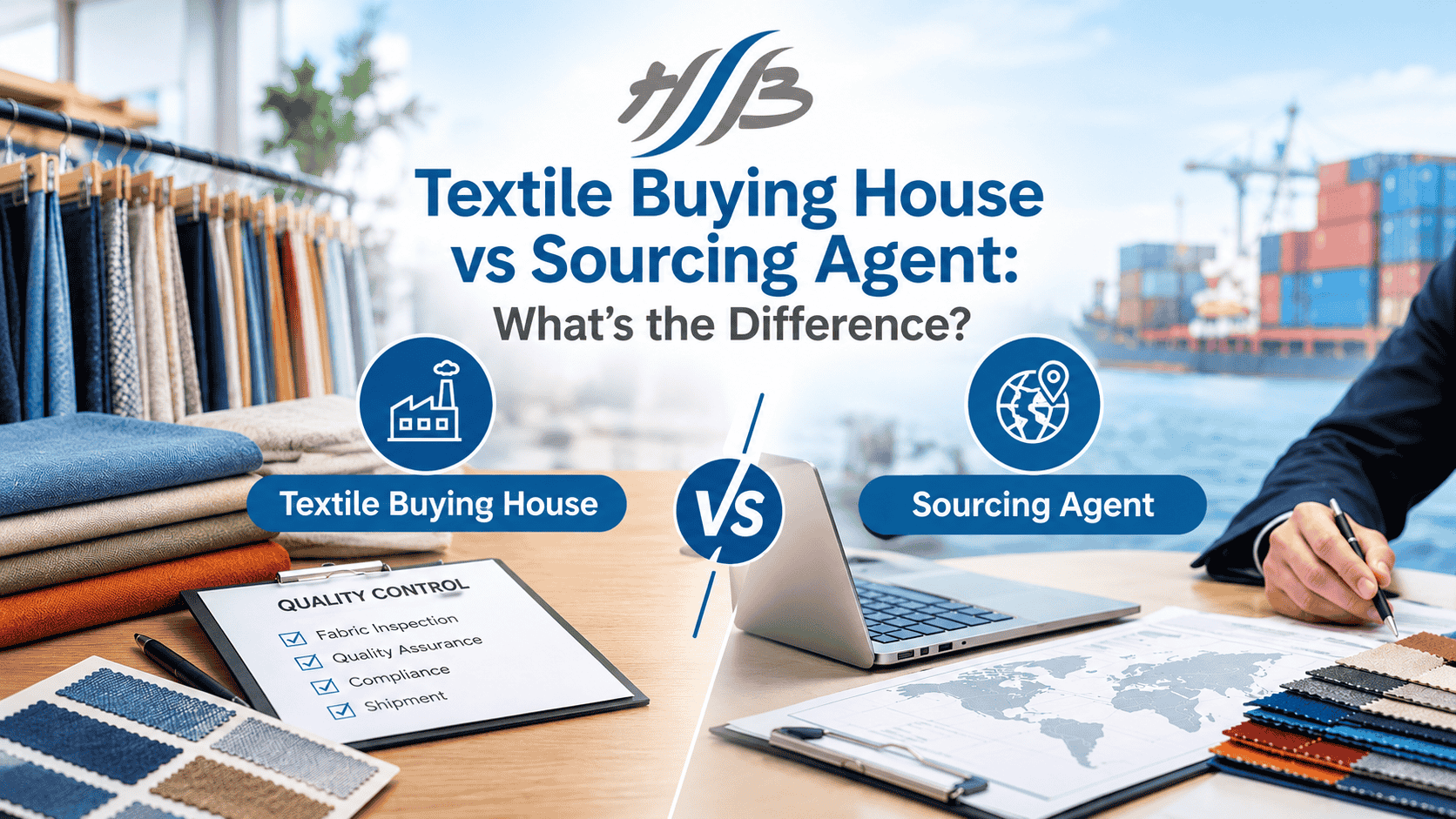
If you want to buy fabric or garments from overseas, you will soon hear two terms: textile buying house and sourcing agent. Many people think they mean the same thing. They are close, but they are not identical.
Choosing the wrong one can cost you time and money. It can also lead to late orders and poor quality. This article explains the difference in simple words so you can pick the right partner for your business.
What Is a Textile Buying House?
A textile buying house is a company that works for international buyers. These buyers can be clothing brands, retailers, importers, or wholesalers. The buying house finds factories, manages orders, and makes sure the goods arrive on time.
Most buying houses are based in countries that make a lot of textiles, such as Pakistan, Bangladesh, India, and China. They know the local factories well. They also know the local rules, prices, and shipping routes.
A buying house usually offers a full service. This often includes:
- Finding and checking suppliers
- Getting fabric and garment samples
- Negotiating prices
- Placing orders with factories
- Checking quality during and after production
- Arranging shipping and paperwork
Think of a buying house as your office in another country. It acts like your own team on the ground, even if you never set foot there. For example, HSB Textile Sourcing is a buying house in Lahore, Pakistan. It offers sourcing, merchandising, and quality control for overseas buyers. You can see the full list on its textile sourcing services page.
What Is a Sourcing Agent?
A sourcing agent is a person or a small company that helps you find suppliers. Their main job is to connect you with the right factory for your product.
Many sourcing agents work alone or with a small team. Some focus on one product, like cotton fabric or knitwear. Others focus on one region or one country.
A sourcing agent often helps with:
- Searching for manufacturers
- Asking for price quotes
- Getting samples
- Visiting factories
- Sharing basic updates on your order
Some sourcing agents do more than this, but many stop once the deal is made between you and the factory. After that, you handle most of the work yourself.
The Main Differences at a Glance
1. Size and structure
A buying house is usually a registered company with many staff members. These may include merchandisers, quality controllers, and shipping experts. A sourcing agent is often one person or a small team.
2. Range of services
A buying house handles the whole process, from the first sample to the final delivery. A sourcing agent mostly helps with finding suppliers and starting the deal.
3. Order management
Buying a house tracks your order day by day. It follows up with the factory and solves problems fast. A sourcing agent may check in now and then, but your own team often has to do the follow-up.
4. Quality control
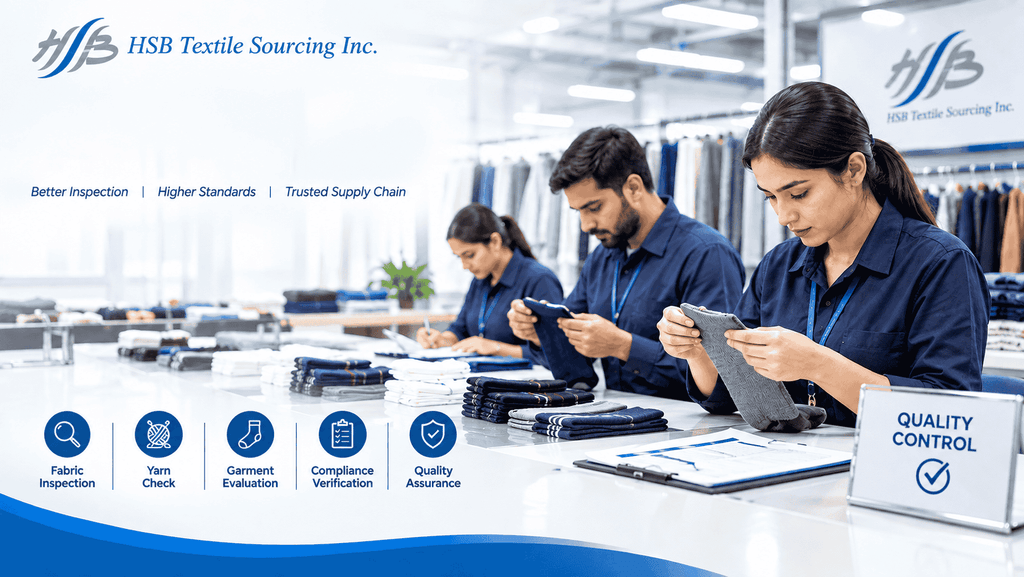
Most buying houses have their own quality control team. They check goods during production and before shipping. Many sourcing agents do not have a full team for this, so you may need to hire a third-party inspector.
5. Cost structure
A buying house often charges a commission, usually a percentage of the order value. A sourcing agent may charge a fixed fee, a commission, or an hourly rate.
6. Responsibility
Buying a house is often more responsible for the final result. If something goes wrong, you have a clear company to talk to. With a lone sourcing agent, the risk can be higher because they may have less to lose.
Pros and Cons of a Textile Buying House
Pros
- You get a complete service in one place
- Strong quality checks reduce the risk of bad goods
- Good for large or repeat orders
- Better at handling shipping and export paperwork
- Often has long-term ties with trusted factories
Cons
- Commission fees may be higher
- Some buying houses ask for a minimum order size
- Small buyers may not get as much attention
Pros and Cons of a Sourcing Agent
Pros
- Often cheaper for small jobs
- More flexible with small orders
- Good for finding new or special suppliers
- You may get more personal attention
Cons
- Limited services after the deal is made
- Quality checks may be weak or missing
- Hard to scale as your business grows
- Higher risk if the agent is new or unproven
Tips for Choosing a Good Partner
- Check their experience. Ask how long they have worked in textile sourcing. Ask which products and markets they know best.
- Ask for references. A trusted partner will share contact details of past clients. Call or email them.
- Visit or video call the office. If you cannot travel, ask for a live video tour of their office and some partner factories.
- Request clear pricing. Ask for a written list of fees. There should be no hidden costs.
- Look at their quality process. Ask how they check goods. Ask to see a sample inspection report.
- Test with a small order. Before a big deal, place a trial order. This shows how they handle time, quality, and communication.
Common Mistakes to Avoid
- Choosing only by price. The cheapest option often costs more in the end.
- Skipping contracts. Always put terms in writing, including price, delivery time, and quality rules.
- Not checking the factory. Make sure the factory is real and meets safety and labor standards.
- Poor communication. Share clear details about fabric type, color, size, and packaging. Small mistakes in the brief can cause big problems later.
- Ignoring raw materials. Weak yarn leads to weak products. Read how to choose the best yarn for socks manufacturing to see why.
- Ignoring shipping terms. Know who pays for freight, insurance, and customs.
Final Thoughts
A textile buying house and a sourcing agent both help you buy from overseas, but they do not offer the same level of service. A buying house gives you a full team and handles your order from start to finish. A sourcing agent mainly helps you find the right supplier.
If your orders are big and regular, a buying house is usually the safer choice. If you are small or just starting, a sourcing agent can be a smart and low-cost way to begin. Whatever you choose, check their record, ask clear questions, and start small.
Ready to talk about your next order? Visit HSB Textile Sourcing to learn more, or read the latest posts on the HSB blog.
Frequently Asked Questions (FAQs)
Is a textile buying house the same as a sourcing agent?
No. A buying house is usually a bigger company that manages the whole order, from samples to shipping. A sourcing agent mainly helps you find a supplier and start the deal.
Which is cheaper, a buying house or a sourcing agent?
A sourcing agent can look cheaper for small jobs. But a buying house often includes inspections, follow-ups, and shipping help in its fee. Compare the total cost, not just the headline price.
Do buying houses work with small orders?
Some do, and some set a minimum order size. It is best to ask before you start. You can contact HSB Textile Sourcing to talk about your order size.
What does a textile buying house do for quality control?
It checks goods while they are being made and again before shipping. This helps catch problems early, before the goods leave the factory.
What products can I source from Pakistan?
Common choices include socks, apparel, towels, bed sheets, denim, medical items, and cotton yarn. You can browse the full products list to see what is available.
Can I use a sourcing agent first and buy a house later?
Yes. Many businesses do this. They use a sourcing agent to find options, then move to a buying house when their orders grow and they need more support.