
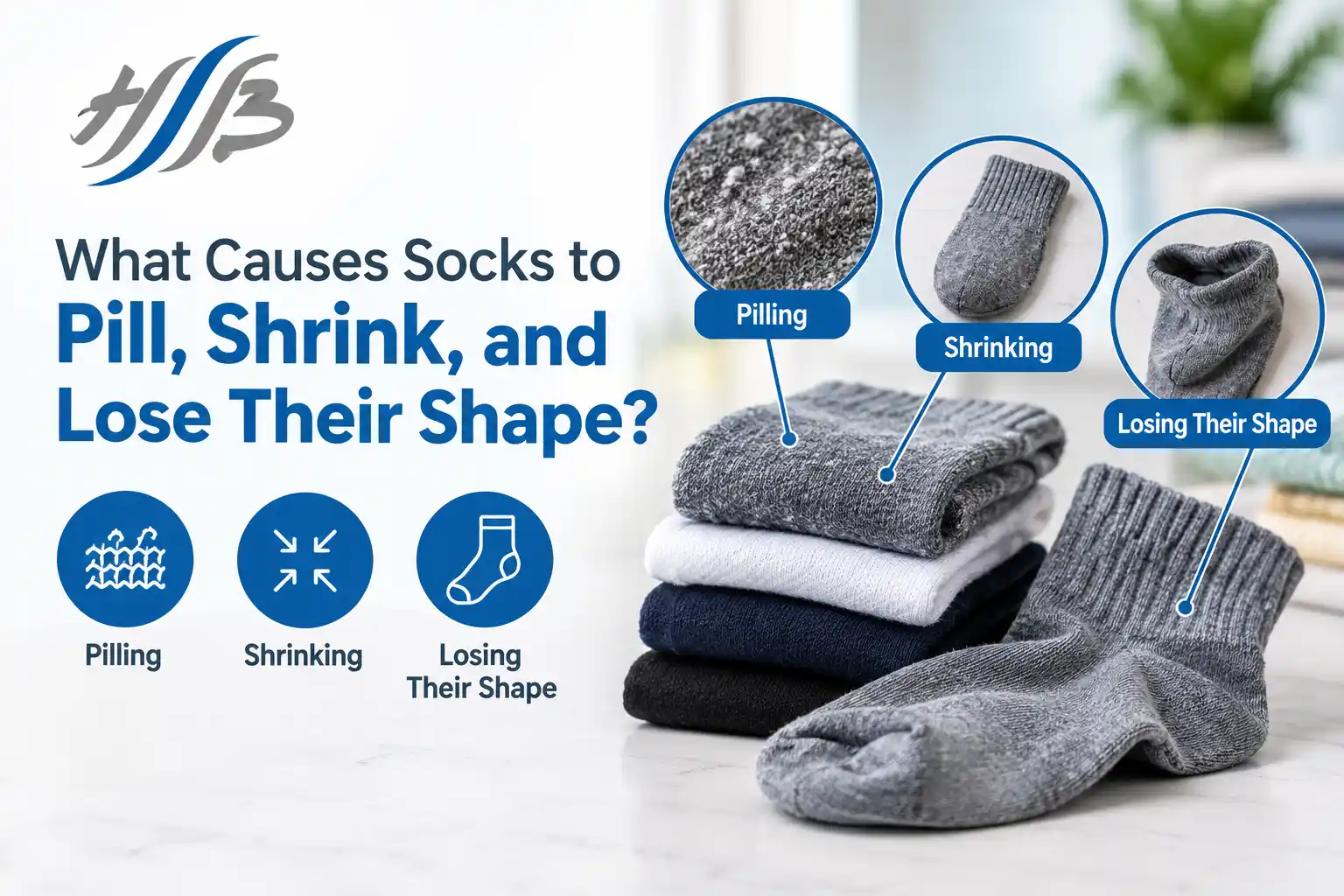
You buy a new pair of socks. They feel soft, and they fit just right. A few weeks later, you notice tiny fuzz balls on the heel, the socks feel tighter, and the cuff sags around your ankle. Sound familiar?
Sock pilling, shrinkage, and loss of shape are some of the most common complaints about everyday socks. Understanding what causes socks to pill can help buyers identify fabric quality issues and prevent premature wear. The good news is that most of these problems have simple causes. Some start with how you wash and wear your socks. Others start much earlier, at the factory, with the yarn and knitting. In this article, we explain what causes each problem and how to prevent it. If you buy socks in bulk, you can also learn how to inspect sock quality before bulk production.
Why Sock Quality Matters
Socks take more stress than almost any other piece of clothing. They rub against your shoes all day, they soak up sweat, and they go through the wash again and again. That is why sock quality depends on three main things:
- The yarn: what fibers are used and how well they are spun
- The knitting: how tight and even the stitches are
- The care: how the socks are washed and dried
When any of these is weak, socks wear out fast. To learn more about the different types of socks and how they are made, visit our socks product page.
What Causes Socks to Pill?
Pills are the small balls of fuzz that form on fabric. They show up most on the heel, the ball of the foot, and the toe. Here is why they happen.
1. Friction and Rubbing
Every step you take rubs your sock against your shoe and your skin. This rubbing pulls loose fiber ends out of the yarn. Over time, those loose ends twist together and form little balls. The more friction, the more pills. That is why the heel usually pills first.
2. Short or Low-Quality Fibers
Yarn is made by twisting many tiny fibers together. When the fibers are short, more ends stick out of the yarn, and they work loose more easily. Cheap cotton often has short fibers. Long-staple cotton, like combed cotton, has longer fibers that stay locked in the yarn and resist pilling much better. Good cotton yarn makes a big difference.
3. Fiber Blends
Many socks mix cotton with polyester or nylon. These synthetic fibers are very strong. That sounds good, but it creates a problem: when a pill forms, the strong fiber holds it onto the sock instead of letting it fall off. Natural fibers like cotton pill too, but the pills often break away on their own.
4. Rough Washing
Washing socks with heavy items like jeans and towels adds extra rubbing. Long wash cycles and overloaded machines also increase friction, which leads to more pills.
What Causes Socks to Shrink?
Sock shrinkage is when socks get smaller after washing. It can make a good pair too tight to wear.
1. Heat
Heat is the biggest cause of shrinking. Hot water and high dryer settings make natural fibers tighten up. Cotton fibers relax and pull closer together when they get hot and wet. A hot dryer then locks in that smaller size.
2. Wool Felting
Wool socks have a special problem. Wool fibers have tiny scales on them, like shingles on a roof. When wool gets hot, wet, and tossed around, those scales grab onto each other and lock together. This is called felting. Felted socks become thick, stiff, and much smaller, and the damage cannot be undone.
3. Relaxation Shrinkage
During knitting, yarn is pulled and stretched under tension. The first time the socks are washed, the yarn relaxes and goes back to its natural length. This makes the socks shrink a little. Good manufacturers pre-shrink yarn or treat the finished socks so this shrinkage is small and controlled.
Why Do Socks Lose Their Shape?
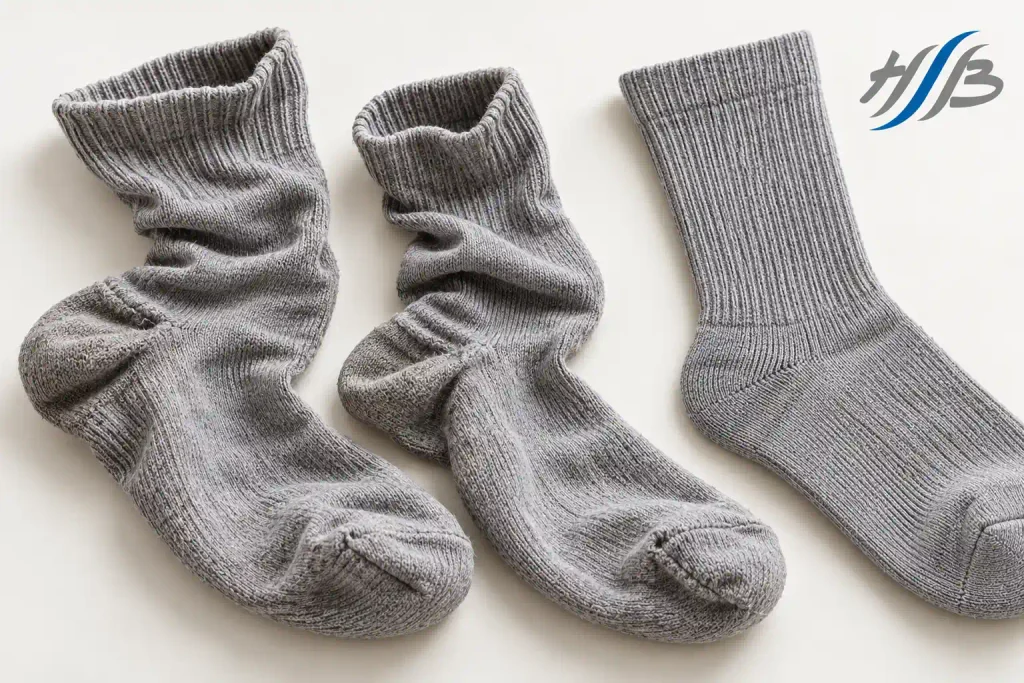
Some socks do the opposite of shrinking. They stretch out, slide down, and bunch up inside your shoe.
1. Worn-Out Elastic
Most socks contain a stretchy fiber called spandex (also called elastane or Lycra). It helps the sock hug your foot and keeps the cuff up. But spandex is sensitive. Hot water, hot dryers, chlorine bleach, and even body oils break it down over time. Once the spandex weakens, the sock can no longer snap back into shape.
2. Loose Knitting
Socks are knitted on machines with a set number of needles. More needles mean tighter, denser stitches. Socks with low knit density have loose stitches that stretch easily and do not bounce back. They also wear through faster.
3. Wrong Size
Socks that are too small get overstretched every time you wear them. Socks that are too big bunch up and slip. Both wear out the elastic faster.
4. How You Put Them On
Pulling hard on the cuff to yank socks on stretches the top band. Over months, this weakens the cuff, and it starts to sag.
How Sock Materials Compare
Different fibers act differently. Here is a quick guide:
| Material | Pilling | Shrinking | Holding Shape |
| Regular cotton | Medium | High | Low without spandex |
| Combed cotton | Low | Medium | Medium |
| Wool | Medium | High (felting risk) | Good |
| Merino wool | Low to medium | Medium | Very good |
| Polyester / nylon | Pills stay on | Very low | Good |
| Bamboo viscose | Medium | Medium | Low to medium |
The best socks usually blend fibers. For example, combed cotton for softness, nylon for strength, and a small amount of spandex for stretch. Sports socks need a different balance from everyday socks. You can see how in our guide to tennis socks vs. regular sports socks.
How to Make Your Socks Last Longer
You cannot stop all wear, but these simple habits help a lot:
- Wash in cold or warm water, not hot.
- Turn socks inside out before washing to reduce rubbing on the outside.
- Use a gentle cycle, and do not overload the machine.
- Wash socks with similar fabrics, not with heavy jeans or towels.
- Air dry or use low heat in the dryer.
- Skip chlorine bleach, because it damages spandex.
- Hand wash wool socks or use a wool cycle with wool-safe detergent.
- Rotate your socks so each pair gets time to rest.
- Remove pills gently with a fabric shaver, not by pulling them.
How Manufacturers Prevent These Problems
Many sock problems are decided before the socks ever reach a store. Smart brands and buyers look for these things during sock manufacturing:
- Better yarn: long-staple or combed cotton and properly twisted yarn
- Higher needle count: tighter, denser knitting
- The right fiber blend: enough nylon for strength and enough spandex for stretch
- Pre-shrinking and finishing: to control shrinkage before sale
- Lab testing: pilling resistance, shrinkage, and stretch-recovery tests
If you are a brand or wholesaler, checking these points early saves money and protects your reputation. Our guide on how to inspect socks quality before bulk production walks through each step. At HSB Textile Sourcing, our sourcing and quality control services help buyers work with trusted sock factories in Pakistan and check every order before it ships. You can also read more about our team and our 30+ years in the textile industry.
Final Thoughts
Socks pill because of friction and loose fibers. They shrink because of heat and the natural behavior of cotton and wool. They lose their shape when the elastic breaks down or the knitting is too loose. With the right care at home and the right choices at the factory, socks can stay soft, fit well, and last much longer.
Looking for well-made socks for your brand? Contact HSB Textile Sourcing to talk about your next order.
Frequently Asked Questions (FAQs)
Why do new socks pill so quickly?
New socks often pill fast because loose fiber ends sit on the surface of the yarn. Friction from shoes pulls them out right away. Socks made with short-fiber cotton or loose knitting pill the fastest.
Can shrunken socks be stretched back?
Cotton socks can sometimes be stretched a little by soaking them in lukewarm water with hair conditioner and gently pulling them. Felted wool socks usually cannot be fixed.
Do cotton socks shrink more than wool socks?
Both can shrink. Cotton shrinks mostly from heat. Wool can shrink even more if it felts in hot water and a tumble dryer. Wool-safe washing prevents this.
Why do my socks keep falling down?
The spandex in the cuff has likely worn out from heat, bleach, or age. Socks that are the wrong size or loosely knitted also slip down more easily.
What sock material lasts the longest?
A blend usually lasts longest. Combed cotton or merino wool mixed with nylon and a small amount of spandex gives comfort, strength, and good shape recovery.