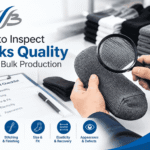

Bulk sock orders fail for boring, preventable reasons: a yarn substitution nobody approved, a cuff that loses recovery after three washes, or sizes that drift half an inch between knitting machines. By the time 40,000 pairs are cartoned and sealed, your options are bad ones: accept the lot, negotiate a discount, or fight for a rework that blows your delivery window.
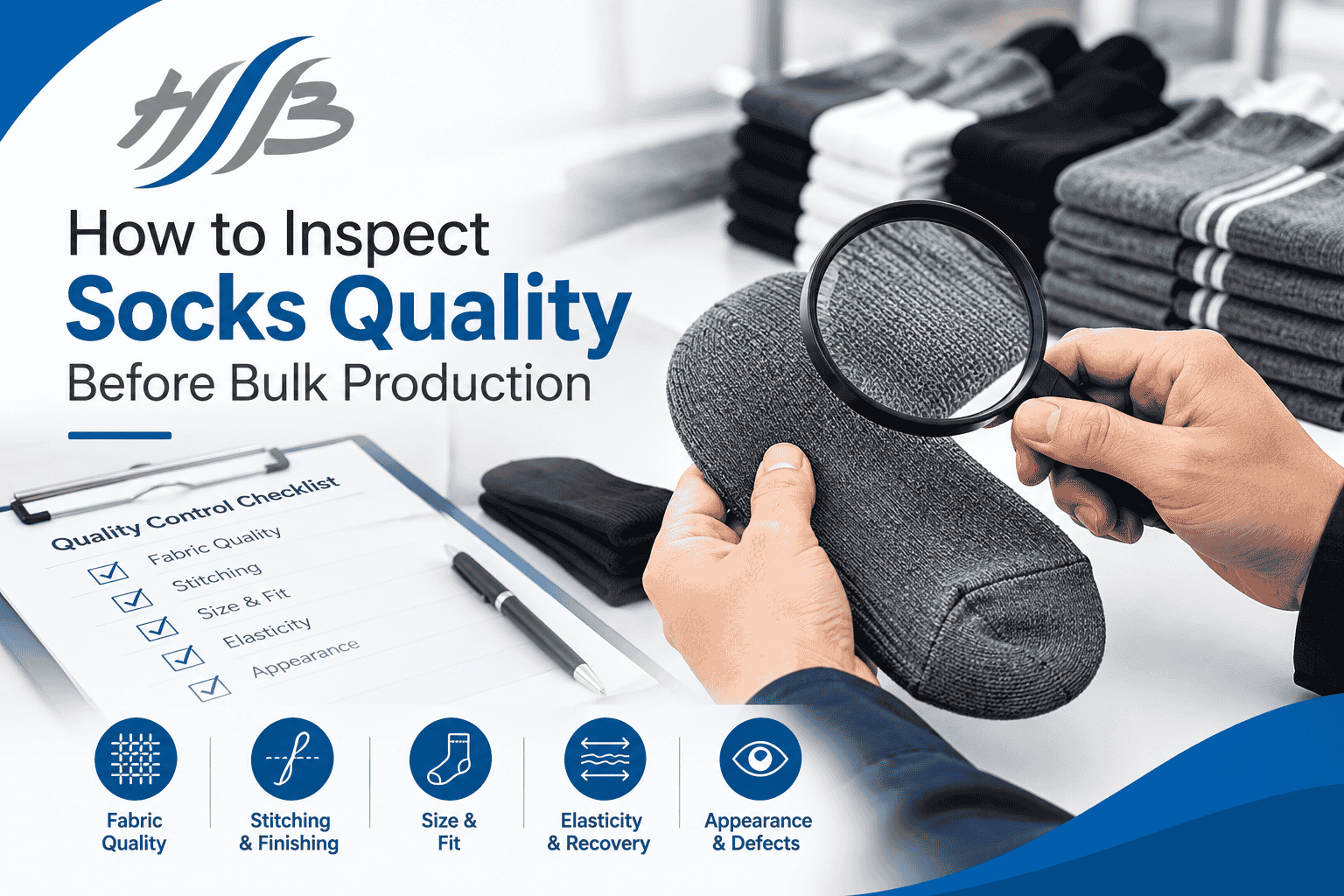
Knowing how to inspect socks quality before bulk production helps buyers catch manufacturing defects, material inconsistencies, and sizing problems before they become expensive mistakes.
Socks quality inspection is cheapest and most effective before the bulk run starts. This guide walks through the pre-production sock quality control checklist buyers should follow, from yarn verification and pre-production sample approval to AQL inspection standards and packaging checks, so what ships matches what you approved.
Why Pre-Production Inspection Matters More for Socks
Socks are circular-knitted, not cut-and-sewn, which changes the risk profile. There’s no cutting table to catch fabric faults, and a single mis-set needle can repeat the same defect across thousands of pairs before anyone notices. Elastane behavior, dye lot consistency, and toe-closure quality are all influenced by production setup.
When buyers inspect socks quality before manufacturing begins, they can identify material inconsistencies, incorrect measurements, stitching defects, and potential durability problems before committing to a large order.
That’s why serious buyers treat pre-production as a critical inspection point. Once you’ve committed to a machine setup and a yarn lot, a quality-controlled sourcing process is what separates a clean shipment from a claim.
Step 1: Verify Yarn and Raw Material Before Knitting Starts
Everything downstream depends on the yarn. Before the factory loads machines, confirm:
- Yarn count and composition: A 30/1 combed cotton specification quietly swapped for carded yarn changes hand feel, pilling resistance, and cost. Ask for the yarn lot card and spinner’s test report.
- Blend ratio: Verify the actual cotton, polyester, and elastane percentages against your tech pack. Fiber composition disputes can create customs and labeling problems in export markets.
- Elastane and covered yarn quality: Poor-quality covered spandex can cause cuffs to lose their stretch and recovery. Ask what denier is being used and where it’s sourced.
- Dye lot consistency: Request approval of the bulk dye lot against your approved shade, not just against the original sample lot.
Buyers sourcing from South Asia often verify spinning quality separately. HSB works directly with cotton yarn suppliers in Pakistan, which makes upstream verification easier than tracing yarn through multiple middlemen.
Step 2: Approve the Pre-Production Sample (PPS) Properly
The pre-production sample is your contract. It must be knitted on the same machine type, with the same yarn lot, in the same factory that will run bulk not a showroom sample from a different facility.
Check the PPS against:
| Parameter | What to verify |
| Gauge & needle count | Matches approved construction (e.g. 144N, 200N) |
| Weight per pair | Within ±5% of approved gram weight |
| Size & measurements | Length, foot length, leg height, cuff width |
| Cuff recovery | Stretch and release 10x measure return to original |
| Toe closure | Linked (flat, smooth) vs. rosso/overlock seam |
| Terry pile height | For cushioned or sports socks |
| Logo & jacquard clarity | No distortion when stretched on a leg form |
Sign off the PPS in writing, with photos, and keep a sealed counter-sample. Every later dispute gets resolved against that sealed pair.
Step 3: Run Lab Tests Before Committing to Bulk
A sock can look perfect and still fail in a consumer’s washing machine. Request third-party or in-house lab testing on the PPS:
- Colorfastness to washing, rubbing (crocking), and perspiration ISO 105 series. Dark navy and red socks bleeding onto white sneakers is a returns nightmare.
- Shrinkage / dimensional stability after 3–5 home laundering cycles. Cotton-rich socks commonly shrink 5–8% if not properly set.
- Pilling resistance Martindale or ICI box test, especially on brushed and terry constructions.
- Abrasion and burst strength on heel and toe zones.
- Elastic recovery after repeated extension.
- OEKO-TEX® Standard 100 certification if you’re selling into the EU, or for kids’ and medical lines.
Testing the PPS costs a few hundred dollars. Testing after bulk costs you the order.
Step 4: Inline Inspection During Knitting
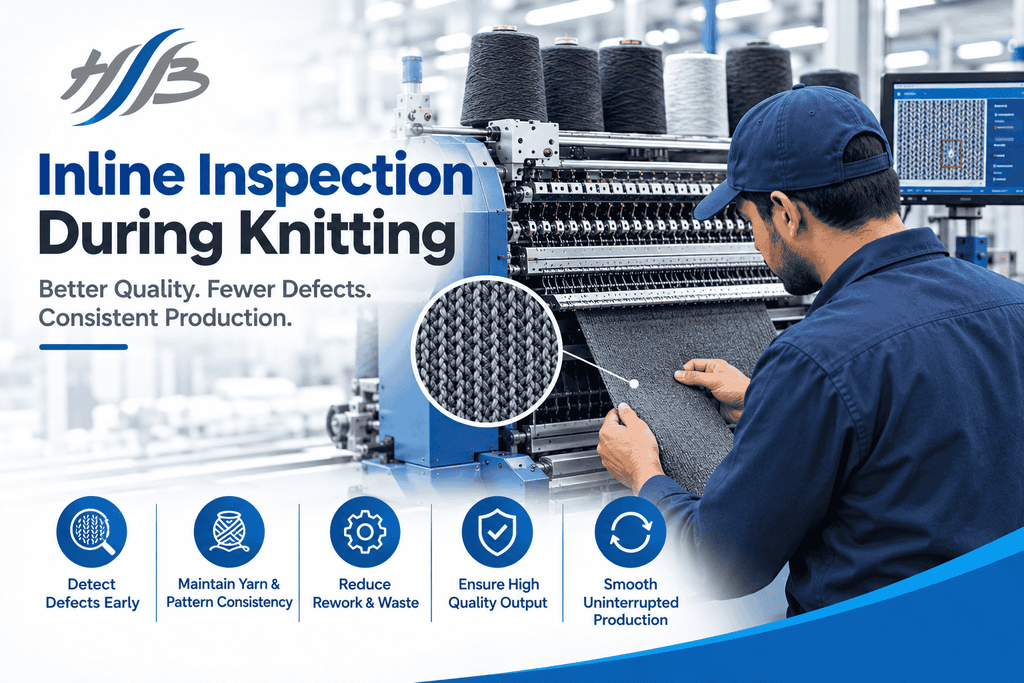
Don’t wait for the final inspection. Schedule an inline check when roughly 15–20% of the order is knitted. At that point you can still correct machine settings without scrapping much output.
Inline sock inspection looks for:
- Needle lines and dropped stitches vertical streaks repeating in the same position signal a damaged needle
- Barré / shade bands from mixed yarn cones or dye lots
- Holes and cracked stitches at the heel gore
- Tension variation between machines producing the same style
- Boarding defects over-heated boarding scorches synthetic fibers and distorts size
This is where having someone physically on the factory floor matters. Remote buyers relying on WhatsApp photos see what the factory chooses to photograph.
Step 5: Final Random Inspection Using AQL Standards
The final pre-shipment inspection follows ISO 2859-1 (ANSI/ASQC Z1.4) sampling. For socks, most buyers apply AQL 2.5 for major defects and 4.0 for minor defects at General Inspection Level II.
Typical classification:
Critical foreign objects (needles, metal), wrong composition labeling, safety hazards on children’s socks. Zero tolerance.
Major holes, broken stitches, wrong size, off-shade, missing or incorrect logo, poor toe closure, measurements outside tolerance, mismatched pairs.
Minor small loose threads, slight yarn knots, minor label misalignment, light soiling that washes out.
Inspect a genuine random sample pulled from sealed cartons across the lot not a tray the factory prepared. Turn socks inside out; most stitching defects hide on the reverse.
Step 6: Packaging, Labeling and Carton Checks
Buyers lose money at customs for reasons that have nothing to do with knitting quality:
- Fiber content and country-of-origin labels matching regulatory requirements in the destination market
- Barcode scannability (test with an actual scanner, not by eye)
- Correct pairing, banding, hangers, or header cards
- Polybag warning text where required
- Carton markings, assortment ratios, and carton weight
- Drop test and moisture control for sea freight
A 45-day ocean transit in a humid container can mildew socks that left the factory clean. Desiccant and proper carton sealing belong in your inspection scope.
Common Mistakes Buyers Make
- Approving samples from a trading company rather than the actual production factory.
- Skipping the inline check to save inspection cost, then discovering a systemic defect at final inspection.
- Vague tech packs “soft cotton” is not a spec; 30/1 combed ring-spun cotton is.
- No sealed counter-sample leaving disputes to memory.
- Inspecting only for appearance and never testing shrinkage or colorfastness.
For a broader view of factory selection, MOQs and lead times, see our 2026 guide to sourcing socks from Pakistan.
Final Thought
Most overseas buyers can’t fly to Lahore or Faisalabad for every inline check. A local sourcing and QC partner gives you factory audits, sample verification, in-line monitoring, and independent AQL pre-shipment inspection with photo reports before goods leave the floor.
HSB Textile Sourcing has worked in socks manufacturing and sourcing for over 30 years, applying 4-point fabric inspection and AQL 2.5/4.0 sampling across every production lot. Learn more about our team or request a quality-controlled quote.
FAQs: Socks Quality Inspection
When should I inspect socks before bulk production?
At three points: yarn approval before knitting, pre-production sample approval, and an inline check at 15–20% completion. Final pre-shipment AQL inspection confirms the lot but is too late to fix systemic defects.
What AQL level should I use for socks?
AQL 2.5 for major defects and 4.0 for minor defects at General Inspection Level II is the standard for most sock categories. Premium, medical, and infant socks often tighten to AQL 1.5.
What are the most common sock defects?
Holes, dropped stitches, needle lines, barré shading, poor toe closure, weak cuff recovery, size variance between machines, and off-shade pairs.
How do I test if a sock cuff will lose its shape?
Stretch and release the cuff 10–15 times and measure return to original width, then repeat after 3–5 wash cycles. Poor recovery usually traces to low-quality covered elastane.
Can I rely on the factory’s own inspection report?
Factory QC is useful but not independent. Buyers should use a third-party or sourcing-agent inspection with a random sample pulled from sealed cartons.
How long does a pre-shipment sock inspection take?
Typically one working day for a standard container-load order, with a photo report issued within 24 hours.