
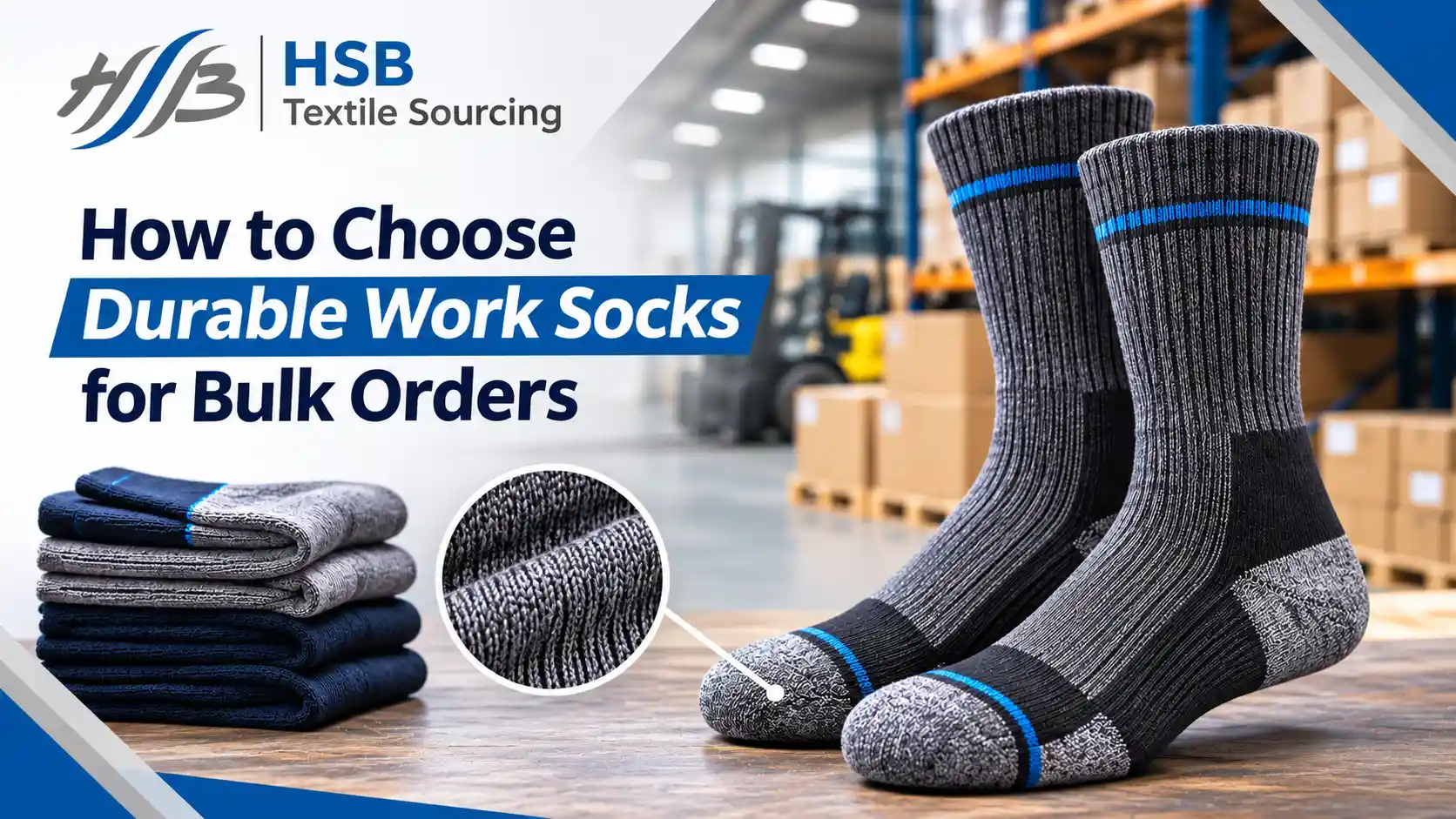
Work socks take a beating, so choosing durable work socks is a must. They spend long shifts inside heavy boots, on hot factory floors, and on muddy job sites. A cheap pair can get holes, lose its stretch, or slide down after just a few washes. When you buy thousands of pairs, those problems add up fast.
Whether you are a wholesaler, a workwear brand, or a company buying socks for staff, this guide will help. You will learn what makes durable work socks different, which features to look for, and how to place a smart bulk order with a reliable socks manufacturer.
Why Durability Matters in Bulk Work Socks
In a bulk order, a small quality problem becomes a big business problem. Here is why durability should be your top priority:
- Lower cost per wear: A sock that lasts twice as long costs half as much per use, even if the price per pair is a little higher.
- Fewer returns and complaints: Holes and loose cuffs lead to unhappy customers and refund requests.
- Worker comfort and safety: Good socks reduce blisters, sweat, and foot pain during long shifts.
- Brand reputation: If you sell under your own label, every weak pair reflects on your brand.
So instead of asking “What is the cheapest sock?”, ask “Which sock gives the best value over its life?”
Choose the Right Materials and Blends
The fiber blend is the most important factor in sock durability. Most strong work socks mix natural and synthetic fibers. Each fiber has a job.
| Fiber | What It Does | Typical Share in Work Socks |
| Cotton | Soft and comfortable, but weak on its own when wet | 50% to 80% |
| Polyester | Adds strength, dries fast, holds shape | 15% to 40% |
| Nylon (polyamide) | Very strong, resists rubbing and holes | 10% to 30% |
| Elastane (spandex, Lycra) | Adds stretch and keeps socks from sliding down | 2% to 5% |
| Merino wool | Warm, wicks sweat, fights odor | 30% to 70% in wool socks |
A popular durable blend is around 70% cotton, 25% polyester or nylon, and 5% elastane. It feels soft but stands up to daily wear.
Avoid 100% cotton for work socks. Cotton holds sweat, loses shape, and wears thin at the heel. Learn more in our guide on choosing the right cotton blend for socks.
Elastane is small in amount but huge in effect. Too little, and socks slide into boots. Too much, and they feel tight. Read why elastane matters in sock fit and shape retention for details.
Key Construction Features of Durable Work Socks
Good fiber is only half the story. How the sock is knitted matters just as much. Check these features on every sample.
Reinforced Heel and Toe
The heel and toe rub against boots all day. Durable work socks add extra yarn, often nylon, in these areas. This is the number one feature that prevents holes.
Cushioning (Terry Loops)
Terry cushioning uses small loops of yarn inside the sock. It absorbs shock and protects the feet. Choose full cushion for heavy boots, or half cushion (sole only) for lighter shoes and warm weather.
Needle Count and Knit Density
Needle count is the number of needles on the knitting machine. Lower counts (around 96 to 120) use thicker yarn and make chunky, warm boot socks. Higher counts (around 144 to 200) make finer, smoother socks for lighter work. Whatever the count, ask for a firm, even knit with no loose or thin spots.
Yarn Weight
Thicker yarns create stronger, warmer socks. Thin yarns are cooler but wear out faster. Ask the factory for the yarn count used in each part of the sock.
Comfortable Cuff
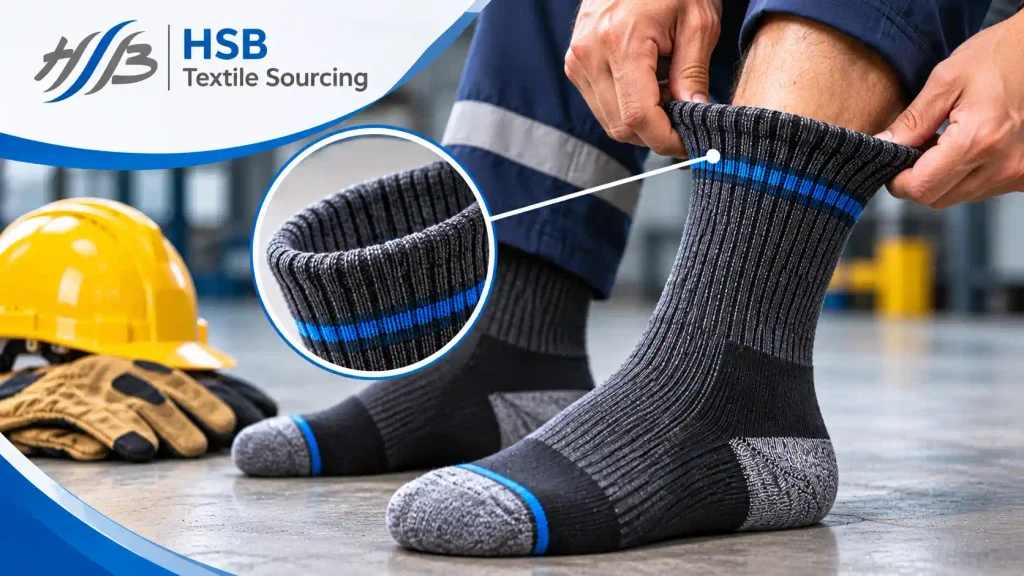
A ribbed cuff with good elastane keeps socks up without cutting into the leg. Weak cuffs are one of the most common complaints in cheap work socks.
Smooth or Hand-Linked Toe Seam
A bulky toe seam can cause rubbing and blisters. A flat or hand-linked seam feels much smoother inside boots.
Match the Sock to the Job
Different jobs need different socks. Think about where the socks will be worn before you choose a style.
| Work Setting | Recommended Sock | Key Features |
| Construction and outdoor | Crew or boot length, full cushion | Reinforced heel and toe, nylon blend |
| Warehouse and logistics | Crew, half or full cushion | Arch support, moisture-wicking polyester |
| Cold storage and winter work | Thick boot socks | Wool or thermal blend, full terry |
| Factories and hot workplaces | Crew, light cushion | Breathable mesh zones, quick-dry yarn |
| Hospitality and healthcare | Ankle or crew, light cushion | Soft cotton blend, anti-odor finish |
For safety boots, choose a sock that reaches above the boot top. This stops the boot edge from rubbing the leg. Many buyers also order matching items, such as work garments and uniforms, from the same supplier to save on shipping.
Final Thoughts
Choosing durable work socks for bulk orders comes down to a few smart choices. Pick a strong fiber blend with nylon or polyester and a little elastane. Look for reinforced heels and toes, the right cushioning, and a cuff that stays up. Then match the sock to the job, test samples, and inspect the order before it ships.
These steps help you buy socks that last longer, keep workers comfortable, and protect your brand.
Ready to start your next order? Explore our socks range, see other products like towels and denim, or read more tips on the HSB Textile Sourcing blog.
Frequently Asked Questions (FAQs)
What is the most durable material for work socks?
A blend works best. Cotton or wool gives comfort, nylon and polyester add strength, and a small amount of elastane keeps the shape. Nylon-reinforced heels and toes add the most durability.
Are 100% cotton socks good for work?
Not really. Pure cotton holds sweat, loses shape, and wears out quickly at the heel. A cotton blend with synthetic fibers lasts much longer.
What is the MOQ for bulk work socks?
MOQs depend on the factory, design, colors, and branding. Plain stock styles usually have lower MOQs than custom designs with knitted logos. Ask your supplier for exact numbers.
How can I test sock durability before a bulk order?
Wear-test samples during real work shifts and wash them many times. You can also ask for lab tests for abrasion, pilling, shrinkage, and color fastness.
What is the difference between full cushion and half cushion socks?
Full cushion socks have terry loops all around the foot for maximum padding. Half cushion socks have padding only under the sole, so they are lighter and cooler.
Can I add my company logo to work socks?
Yes. Logos can be knitted into the sock, printed, or added on packaging. Knitted logos last the longest but may need a higher MOQ.
Why source work socks from Pakistan?
Pakistan grows its own cotton and has a large, experienced socks industry. This makes it a strong choice for quality socks at competitive prices. Contact HSB Textile Sourcing to discuss your order.