
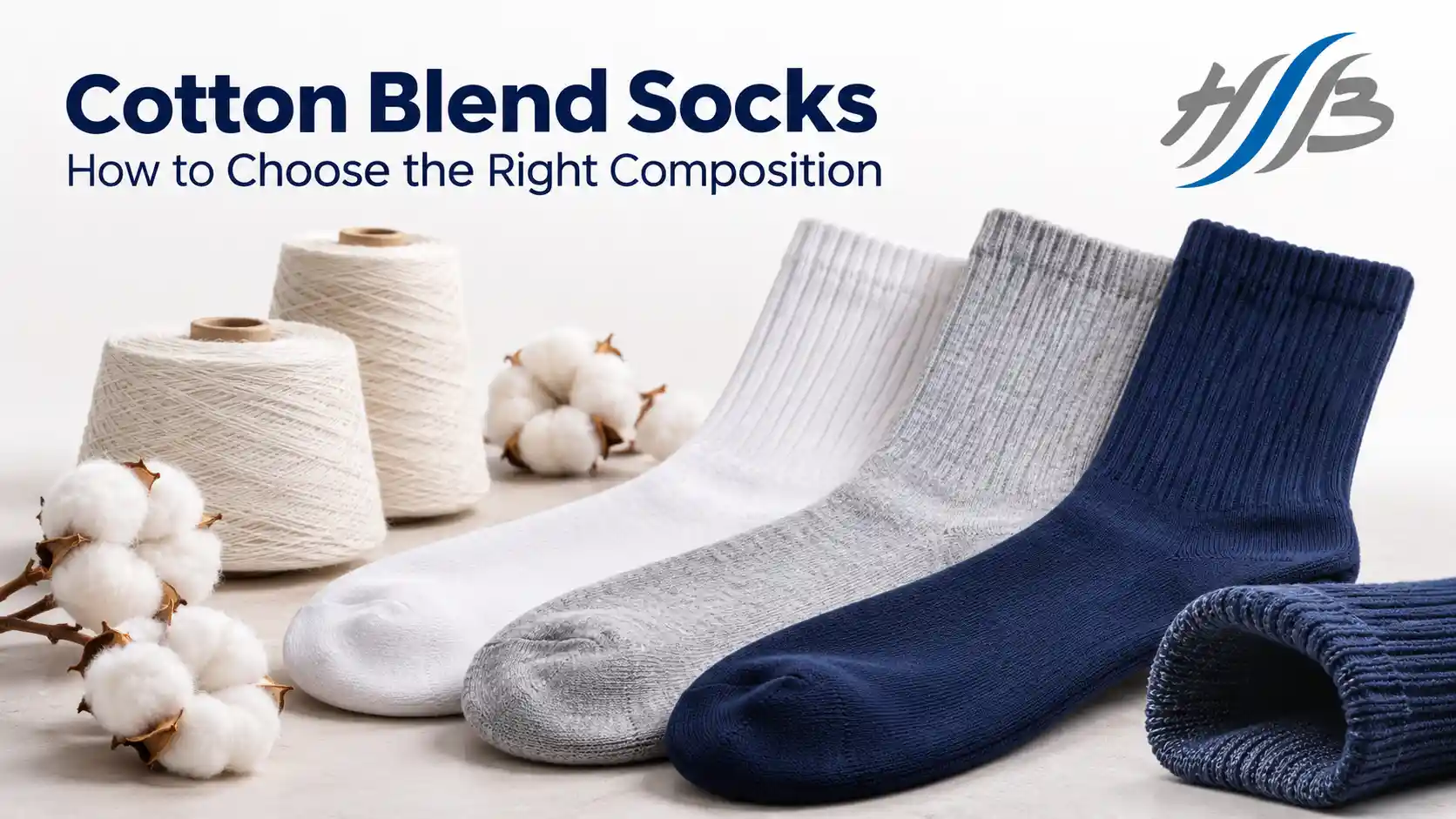
Picking the right socks starts with one small label: the fiber mix. Most people check the color and size, but the sock composition decides how a pair feels, how long it lasts, and how well it handles sweat.
Cotton blend socks are the most popular choice around the world. They mix soft cotton with other fibers like polyester, nylon, and spandex. Each fiber adds something cotton can’t do on its own.
In this guide, you’ll learn what each fiber does, which blends work best for different uses, and what to check before you buy. Whether you’re shopping for your family or ordering from a socks manufacturer for your brand, this will help you choose the right mix.
What Are Cotton Blend Socks?
Cotton blend socks are socks made from cotton plus one or more other fibers. A label might read “80% cotton, 17% polyester, 3% spandex.” That list is the sock’s composition.
Why not just use 100% cotton? Pure cotton feels great, but it has some weak points. It soaks up sweat and stays wet. It can lose its shape after a few washes. It also wears thin faster at the heel and toe.
Blending fixes these problems. Synthetic fibers add strength, stretch, and faster drying. Cotton keeps the sock soft and breathable. The goal is to find the right balance for how the socks will be used.
Common Fibers Blended With Cotton
Each fiber in a sock has a job. Here is what the main ones do.
Cotton
Cotton is the base of most everyday socks. It is soft, breathable, and gentle on skin. Higher grades like combed cotton and long-staple cotton have fewer short fibers, so they feel smoother and pill less. The quality of the cotton yarn matters as much as the amount.
Polyester
Polyester is strong and dries quickly. It pulls sweat away from the skin, which is why it shows up in moisture-wicking socks. It also helps socks keep their color and shape after many washes.
Nylon (Polyamide)
Nylon is one of the toughest fibers used in socks. Makers often add it to the heel and toe, where socks wear out first. Even a small amount can make a pair last much longer.
Spandex (Elastane or Lycra)
Spandex gives stretch and recovery. It helps socks hug the foot and stay up on the leg. Most socks need only 2% to 5% spandex. Too much can make them feel tight or hot.
Other Fibers
Some blends add bamboo viscose for extra softness or wool for warmth. Many brands now use recycled polyester too. Learn more in our guide on recycled vs virgin yarn for socks.
Popular Cotton Blend Compositions and Their Best Uses
The table below shows common blends you’ll see on sock labels. The numbers are typical ranges, not strict rules.
| Composition | How It Feels | Best For |
| 80–85% cotton, 12–17% polyester, 3% spandex | Soft, breathable, good shape | Everyday crew and casual socks |
| 75% cotton, 22% nylon, 3% spandex | Soft with a strong heel and toe | School, work, and long-wear socks |
| 60–70% cotton, 25–35% polyester, 2–5% spandex | Lighter, dries faster | Gym, walking, and light sports |
| 50% cotton, 45% polyester, 5% spandex | Cool, stretchy, quick-drying | Running and training socks |
| 90–95% cotton, 5–10% spandex | Very soft, less durable | Dress socks and sensitive skin |
| 70% combed cotton, 25% nylon, 5% spandex | Smooth, firm fit | Premium and business socks |
As a simple rule, more cotton means more softness. More synthetic fiber means more strength and faster drying.
How to Choose the Right Composition
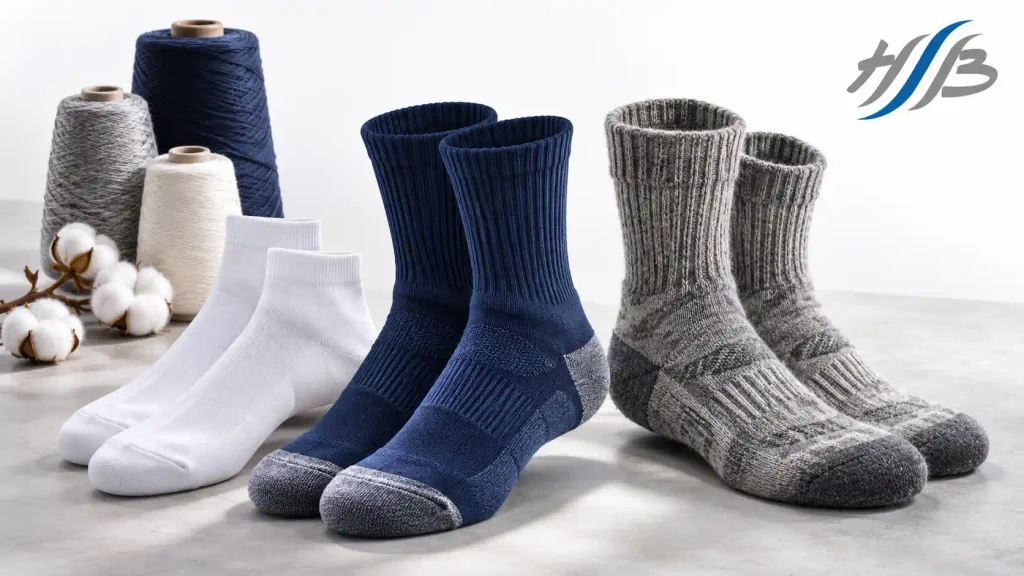
The best sock fabric blend depends on who will wear the socks and what they will do in them. Ask these questions first.
For Everyday Comfort
Pick socks with 75% to 85% cotton. This range feels soft and breathes well, while a little polyester and spandex keep the fit neat. These are great for casual wear, school, and home.
For Sports and Active Use
Look for less cotton, around 50% to 65%. More polyester or nylon helps pull sweat away and reduces blisters. Cushioned soles and mesh zones also help. Our article on sports socks materials explains this in more detail. If you play racket games, see tennis socks vs regular sports socks.
For Durability
Choose a cotton nylon blend with at least 15% to 25% nylon. These socks handle long days on your feet and many trips through the washing machine.
For Hot or Cold Weather
In hot weather, a higher share of quick-drying polyester keeps feet cooler. In cold weather, thicker cotton terry or a cotton-wool mix adds warmth.
For Sensitive Skin
Go for high-cotton socks with soft, flat toe seams. Combed or organic cotton is a good pick, since it has fewer rough fibers.
Quality Factors Beyond the Fiber Label
Two socks can have the same composition and still feel very different. Keep these points in mind:
- Yarn quality: Combed and ring-spun cotton yarns are smoother and stronger than cheap open-end yarns.
- Needle count: A higher needle count (like 168 or 200 needles) makes a finer, smoother knit.
- Weight and thickness: Heavier socks with terry loops give more cushion. Lighter socks feel cooler.
- Toe seam: Hand-linked or flat seams feel better than thick, bulky seams.
- Dye and finish: Good color fastness means socks won’t fade or bleed in the wash.
- Shrinkage: Well-made cotton blend socks should shrink very little after washing.
Tips for Bulk Buyers and Private Labels
If you’re buying socks in large amounts, the right composition protects your brand and your profit. Follow these steps:
- Know your customer. Match the blend to the end use, such as casual, sports, or premium.
- Ask for a lab test. A fiber test confirms the real percentages match the label.
- Order samples first. Wash and wear them to check comfort, fit, and shrinkage.
- Set clear specs. Write down the blend, yarn count, needle count, weight, and size chart.
- Check compliance. Look for factories with certifications like OEKO-TEX, WRAP, or BSCI.
- Use inspections. Pre-shipment AQL checks catch problems before goods leave the factory.
Pakistan is one of the world’s top cotton producers, which makes it a strong place to source cotton blend socks. A local buying agent can help you find the right mill. HSB Textile Sourcing offers sourcing and quality control services and has worked with sock makers for over 30 years. You can view past work in our socks portfolio.
Final Thought
The right cotton blend gives you the best of both worlds: the softness of cotton and the strength of synthetic fibers. For daily wear, stick to a high-cotton mix. For sports, choose more polyester or nylon. For long life, add nylon. Always look past the label and check yarn quality, knit, and finish too.
Ready to develop your own line of cotton blend socks? Contact HSB Textile Sourcing to talk about your specs, samples, and order size.
Frequently Asked Questions
What is the best composition for cotton blend socks?
For everyday use, about 80% cotton, 17% polyester, and 3% spandex works well. It is soft, breathable, and keeps its shape.
Are 100% cotton socks better than cotton blend socks?
Not always. Pure cotton is soft but holds sweat, stretches out, and wears thin faster. A blend usually lasts longer and fits better.
How much spandex should socks have?
Most socks need 2% to 5% spandex. This gives enough stretch to stay up without feeling tight.
Which is better for socks, polyester or nylon?
Polyester is better for drying fast and wicking sweat. Nylon is better for strength and long life. Many good socks use a little of both.
Are cotton blend socks good for sports?
Yes, if the blend has less cotton and more synthetic fiber. Around 50% to 65% cotton works well for most active use.
Can I order custom cotton blend socks from Pakistan?
Yes. Many Pakistani mills make custom socks for global brands. A sourcing partner like HSB Textile Sourcing can help with samples, quality checks, and shipping.