
More and more shoppers want products that are kind to the planet, and socks are no exception. Big brands and small private labels are now asking their suppliers for recycled yarn socks. But is recycled yarn really as good as new, or virgin, yarn? Will the socks feel the same, last as long and cost more?
At HSB Textile Sourcing, we have worked with the sock industry in Pakistan for more than 30 years, and the recycled vs virgin question comes up in almost every new sock project. In this buyer’s guide, we compare recycled vs virgin yarn for socks in simple terms so you can choose the right yarn for your brand, your customers and your budget.
What Is Virgin Yarn?
Virgin yarn is made from brand-new fibers that have never been used before. For example:
- Virgin cotton comes straight from cotton plants.
- Virgin polyester and virgin nylon are made from oil-based raw materials.
Because the fibers are new, virgin yarn is usually very consistent. The fibers are long and strong, which makes the yarn smooth and easy to knit. For many years, almost every sock on the market was made with virgin yarn.
What Is Recycled Yarn?
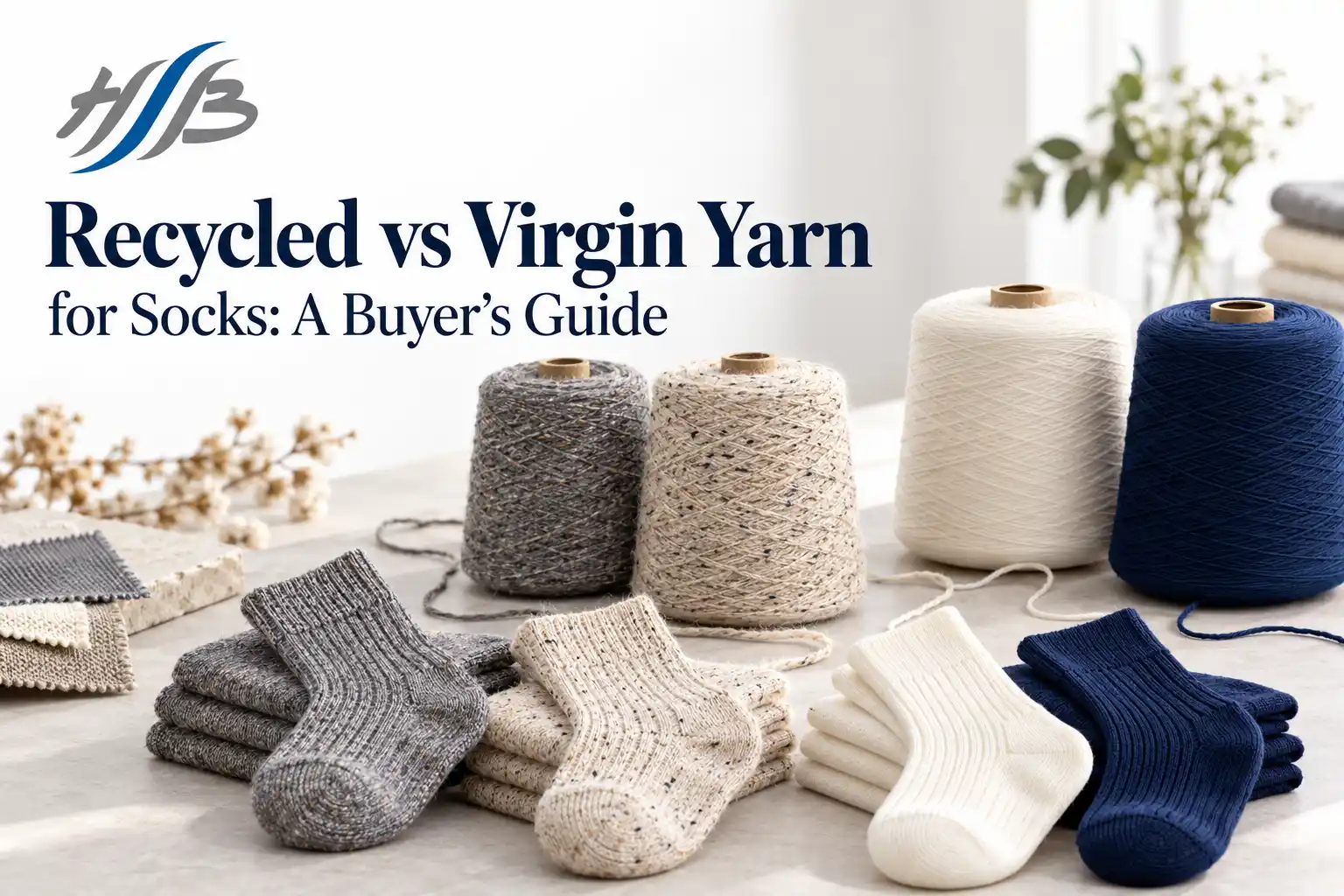
Recycled yarn is made from fibers that already had a life before. Instead of throwing these materials away, factories clean, break down and spin them into new yarn. Common types used in socks include:
- Recycled cotton: Made from cotton waste, such as fabric scraps left over from cutting rooms (pre-consumer) or old clothes (post-consumer).
- Recycled polyester (rPET): Often made from used plastic bottles that are melted and spun into fiber.
- Recycled nylon: Made from waste such as old fishing nets, carpets or factory scraps.
Recycled yarn helps cut waste and reduces the need for new raw materials, which is why sustainable brands love it.
Recycled vs Virgin Yarn: Key Differences for Socks
Here is a quick side-by-side look at how the two compare.
| Factor | Virgin Yarn | Recycled Yarn |
| Source | Brand-new fibers | Waste materials and used products |
| Strength | Very strong and consistent | Good, but recycled cotton can be weaker |
| Softness | Smooth and soft | Can be slightly rougher, depends on blend |
| Color options | Almost any color | Some recycled cotton has limited colors |
| Environmental impact | Uses more new resources | Reduces waste and resource use |
| Cost | Usually lower and stable | Can be slightly higher |
| Availability | Easy to find | Growing, but may need more lead time |
| Brand story | Standard | Strong sustainability message |
1. Strength and Durability
Socks take a lot of stress, especially at the heel and toe. Virgin cotton has long fibers that twist tightly into a strong yarn. Recycled cotton is different. The recycling process cuts the fibers into shorter pieces, which can make the yarn weaker and more likely to pill.
That is why recycled cotton socks are almost always blended. Mills often mix recycled cotton with virgin cotton or recycled polyester to add strength. Recycled polyester and recycled nylon, on the other hand, are made by melting and re-spinning, so their strength is very close to virgin versions.
2. Comfort and Softness
Comfort is a top reason people buy one pair of socks over another. Virgin cotton feels very soft and smooth. Recycled cotton can feel a little rougher, but a smart blend and good finishing can make the difference hard to notice.
Recycled polyester socks feel much like regular polyester socks. They are light, quick-drying and great for sports and activewear socks.
3. Color and Appearance
Virgin yarn can be dyed in almost any shade. Some recycled cotton is sorted by color before it is spun, so the final yarn keeps the color of the waste it came from. This can save water and dye, but it may limit your color choices. Recycled polyester and nylon can usually be dyed like virgin yarn.
4. Environmental Impact
This is where recycled yarn shines. Using recycled fibers:
- Keeps waste out of landfills and oceans.
- Reduces the need to grow new cotton or make new plastic.
- Can lower water, energy and chemical use.
Virgin yarn uses new resources each time. However, virgin options such as organic cotton can still be a more responsible choice than conventional cotton.
5. Cost and Lead Time
Recycled yarn can cost a little more than virgin yarn, mainly because of collecting, sorting and certifying the waste. Some recycled yarns also need a longer lead time or a larger minimum order. Prices change with the market, so always ask your supplier for current quotes.
Common Sock Yarn Blends
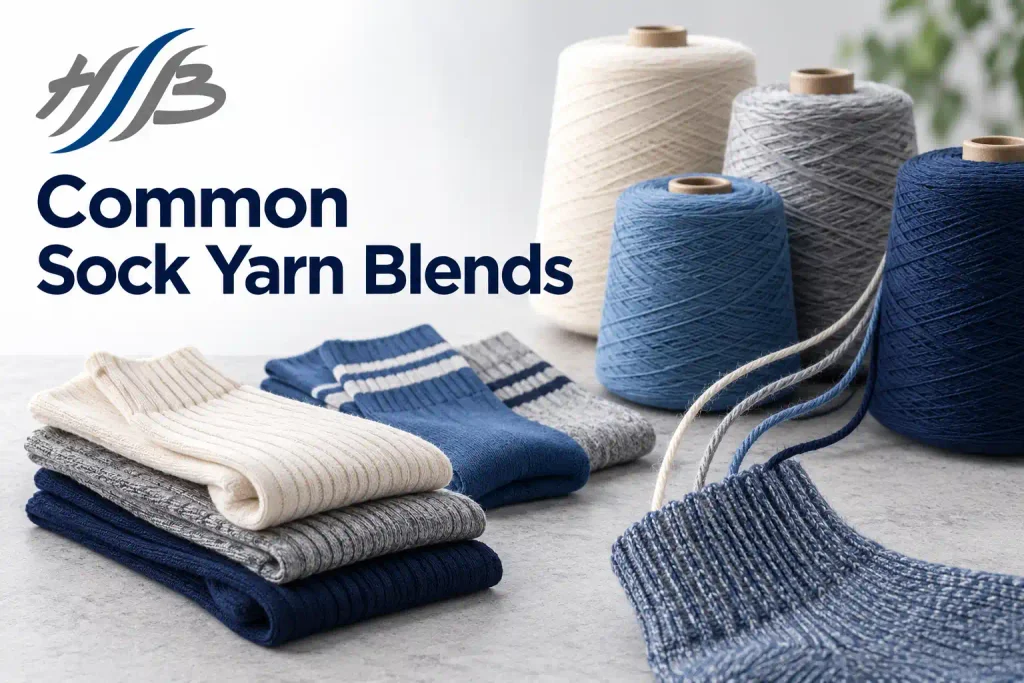
Most socks are not made from just one fiber. A blend gives the best mix of comfort, stretch and strength. Here are a few common examples:
- Everyday cotton socks: Cotton with a small amount of polyester or nylon and elastane (spandex) for stretch.
- Eco-friendly cotton socks: A mix of recycled cotton and virgin or organic cotton, plus recycled polyester and elastane.
- Sports socks: Recycled polyester or nylon for moisture control, with cotton in cushioned areas. You can learn more in our guide to tennis socks vs. regular sports socks.
- Dress socks: Fine virgin cotton or nylon for a smooth, thin look.
To see the kinds of socks we source, visit our socks product page and our socks portfolio.
How to Check Recycled Claims
Because recycled products are popular, buyers need proof that the yarn is really recycled. Here is what to look for:
- GRS (Global Recycled Standard): Tracks recycled content through the supply chain and also covers social and environmental practices.
- RCS (Recycled Claim Standard): Verifies the amount of recycled material in a product.
- Transaction certificates: Documents that link your specific order to certified recycled material.
- OEKO-TEX Standard 100: Tests textiles for harmful substances, which matters for products worn on the skin.
Always ask your supplier for valid certificates and check that the recycled percentage on your label matches the paperwork.
Which Yarn Should You Choose?
The best choice depends on your brand and your customers.
Choose virgin yarn if:
- You need maximum softness and strength, such as for luxury dress socks.
- You want the widest range of colors.
- Your budget is tight and you need stable pricing.
Choose recycled yarn if:
- Sustainability is part of your brand story.
- Your retail customers ask for eco-friendly products.
- You make sports, casual or everyday socks where blends work well.
Choose a blend if:
- You want a sustainability message without giving up comfort or durability.
For many buyers, a smart blend of recycled and virgin yarn gives the best of both worlds.
Tips for Sourcing Recycled Yarn Socks
Follow these steps to avoid problems in bulk orders:
- Share clear specs. List the exact yarn blend, recycled percentage, sock size, weight and needle count.
- Ask for certificates early. Check GRS or RCS documents before you approve the supplier.
- Test samples. Wash and wear samples to check softness, stretch, pilling and shrinkage.
- Plan extra lead time. Recycled yarn may take longer to source.
- Inspect during production. Make sure the factory uses the approved yarn, not a cheaper substitute. Our guide on how to inspect socks quality before bulk production explains what to check.
- Work with a local partner. An on-the-ground team can visit mills, check yarn and manage quality. Learn the difference between a textile buying house and a sourcing agent to pick the right partner.
Final Thoughts
The choice between recycled vs virgin yarn for socks is not about which is “better” in every case. Virgin yarn gives top softness, strength and color choice. Recycled yarn gives a strong sustainability story and less waste. Many brands find that a well-planned blend delivers comfort, durability and an eco-friendly label at a fair price.
Ready to develop your next sock line? Explore our textile sourcing services, see our cotton yarn options, or contact HSB Textile Sourcing to request a quote.
Frequently Asked Questions (FAQs)
Are recycled yarn socks as good as virgin yarn socks?
They can be. Recycled polyester and nylon perform very close to virgin versions. Recycled cotton is a bit weaker, so it is usually blended with other fibers to keep socks strong and soft.
Do recycled socks cost more?
Recycled yarn can cost slightly more than virgin yarn because of collection, sorting and certification. The final price depends on the blend, the recycled percentage and your order size.
What is the best recycled yarn for sports socks?
Recycled polyester and recycled nylon are great for sports socks. They wick moisture, dry quickly and stay strong after many washes.
Can socks be made from 100% recycled cotton?
It is uncommon. Recycled cotton has short fibers, so 100% recycled cotton yarn can be weak. Most mills blend it with virgin cotton or recycled polyester for better strength.
How can I prove my socks contain recycled yarn?
Ask your supplier for certificates such as GRS or RCS, along with transaction certificates for your order. These documents track the recycled content from the yarn to the finished socks.