
Choosing the right sports socks is important for comfort, foot protection, and athletic performance. Whether you are running, playing football, or working out at the gym, the material of your socks can affect how your feet feel.
Unlike regular socks, high-quality sports socks are designed to handle sweat, movement, and repeated use. Common materials include cotton, polyester, nylon, elastane, and merino wool. Each offers different benefits.
Understanding these materials helps athletes choose better socks and allows brands to develop quality products. Here are seven important material qualities to consider when choosing sports socks.
1. Moisture-Wicking Ability
Moisture management is one of the most important features of sports socks materials. During exercise, feet produce sweat, which can make socks wet and uncomfortable.
Moisture-wicking fabrics help move sweat away from the skin so it can evaporate more easily. Polyester is commonly used in athletic socks because it dries quickly. Nylon also supports moisture management in suitable fabric designs, while merino wool helps manage moisture naturally. Cotton absorbs sweat but usually takes longer to dry. This can make cotton-rich socks less comfortable during intense activities.
For running, football, and gym training, moisture-wicking sports socks can help keep feet feeling drier and reduce discomfort.
2. Breathability and Airflow
Breathability allows air and moisture vapor to move through the sock fabric. Good airflow helps prevent excess heat and keeps feet more comfortable during physical activity. Breathable sports socks often use lightweight polyester, nylon, or cotton blends. However, breathability also depends on the knitting structure. Socks with mesh ventilation zones may provide better airflow than thick, tightly knitted socks.
For warm weather and high-intensity sports, choosing breathable materials is especially important. Manufacturers should balance airflow with fabric strength to create socks that remain comfortable without wearing out quickly.
3. Softness and Skin Comfort
Sports socks stay in direct contact with the skin throughout the day. Rough or stiff fabrics can increase friction and cause irritation.
Soft materials make athletic socks more comfortable, especially during long workouts.Cotton is popular for its natural softness. Combed cotton provides a smoother feel because shorter fibers are removed during processing.
Merino wool is another comfortable option for premium sports socks. Modern synthetic yarns can also provide a soft, smooth surface.The best material for sports socks should feel comfortable without losing strength after repeated washing.
4. Elasticity and Shape Retention
A good sports sock should stretch comfortably and stay in place during movement.
Elasticity helps socks fit around the foot and ankle, while shape retention prevents them from becoming loose after repeated use.
Elastane, also called spandex, is commonly blended with other fibers to improve flexibility.
It helps sports socks:
- Maintain a secure fit
- Stretch during movement
- Reduce slipping and bunching
- Keep their shape after washing
Polyester and nylon can also provide structural support.
For custom sports socks manufacturing, selecting the right elastane content helps balance comfort, flexibility, and durability.
5. Durability and Wear Resistance
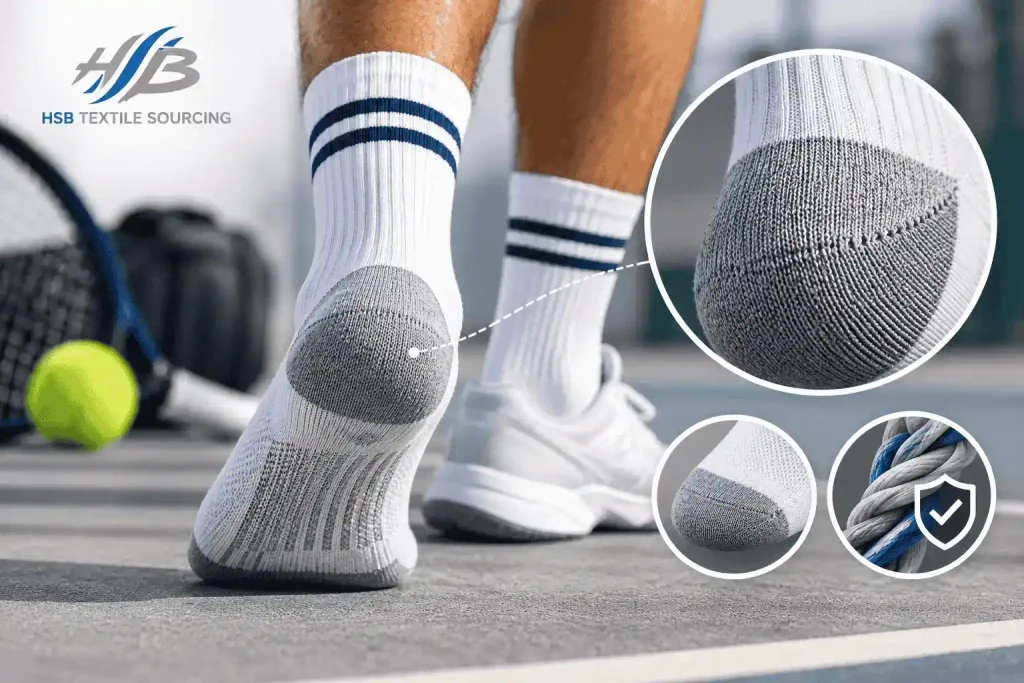
Sports socks face constant friction inside shoes, especially around the heels and toes. Durable materials help them withstand regular workouts, frequent washing, and daily wear. Nylon offers excellent abrasion resistance, while polyester provides strength and helps maintain fabric quality. Cotton blends combine softness with the durability of synthetic fibers.
Manufacturers often use reinforced heels and toes to improve the lifespan of durable athletic socks. These features help reduce wear and maintain comfort during physical activities. Brands ordering sports socks in bulk should check fabric strength, stitching quality, and washing performance to ensure long-lasting products.
Read our guide on how to inspect socks quality before bulk production for more quality control tips.
6. Cushioning and Impact Comfort
Cushioning is an important feature of performance athletic socks, especially for sports like running, basketball, and tennis. These activities put repeated pressure on the feet, making extra padding helpful for comfort and reducing friction. Many sports socks use terry-loop knitting to provide cushioning around the heel, toe, and sole.
Sports socks are available with full, targeted, or lightweight cushioning. Full cushioning offers extra padding, while targeted cushioning provides support in specific areas. However, thicker socks are not always better, as too much padding can increase heat and make shoes feel tight. The right cushioning depends on the sport, footwear, and comfort needs.
7. Temperature Regulation
Temperature regulation helps keep feet comfortable during different weather conditions and physical activities. Lightweight polyester and nylon blends are suitable for warm-weather sports because they dry quickly and allow better airflow. Merino wool provides natural insulation and moisture management, making it a good choice for hiking, outdoor training, and colder weather.
Cotton feels soft and comfortable during light activities but may remain damp during intense workouts. When selecting athletic socks materials, it is important to consider the climate, type of sport, and comfort needs. The right fabric blend helps manage heat and moisture without adding unnecessary thickness.
Which Sports Socks Material Is Best?
Different materials offer different benefits. The right choice depends on how the socks will be used.
| Material | Main Benefit | Best Suited For |
| Cotton | Softness and comfort | Light activity |
| Polyester | Quick drying and durability | Running and gym workouts |
| Nylon | Strength and wear resistance | High-performance socks |
| Elastane | Stretch and secure fit | Fitted athletic socks |
| Merino Wool | Warmth and moisture management | Hiking and outdoor sports |
Most performance socks combine multiple fibers to balance comfort, flexibility, and durability.
Learn more about choosing the best yarn for socks manufacturing.
How to Choose Quality Sports Socks for Your Brand
For retailers, wholesalers, and private-label brands, selecting the right material is an important part of product development.
Consider the target sport, fabric composition, sock thickness, cushioning, and customer requirements.Before placing a bulk order, request samples to evaluate fabric softness, elasticity, breathability, and durability.
Working with a reliable sourcing partner can also help businesses compare yarn options and maintain product standards.HSB Textile Sourcing supports international buyers with sports socks sourcing from Pakistan, including material selection, product development, and quality inspection.
Final Thoughts
Choosing the right sports socks materials requires attention to moisture control, breathability, softness, elasticity, durability, cushioning, and temperature regulation.
A suitable fabric blend can improve comfort, performance, and product life.
At HSB Textile Sourcing, we help brands and international buyers source quality sports socks from Pakistan based on their material, design, and production requirements.
Frequently Asked Questions
What is the best material for sports socks?
Polyester, nylon, and elastane blends are popular choices because they offer durability, moisture management, and flexibility. The best option depends on the sport.
Are cotton socks good for sports?
Cotton socks work well for casual wear and light activity. However, cotton absorbs sweat and dries slowly, making synthetic blends more suitable for intense workouts.
Why is polyester used in athletic socks?
Polyester is lightweight, durable, and quick-drying. These qualities make it useful for running, gym training, and other physical activities.
What makes sports socks more durable?
Strong fibers such as nylon and polyester, reinforced heels and toes, and quality knitting help improve sock durability.
What material helps sports socks stay in place?
Elastane provides stretch and shape recovery. When blended with other fibers, it helps socks fit securely without slipping.