
Have you ever pulled on a pair of socks that slid down into your shoes by lunchtime? Or owned socks that looked baggy after just a few washes? The problem is often a missing or poor-quality stretch fiber called elastane.
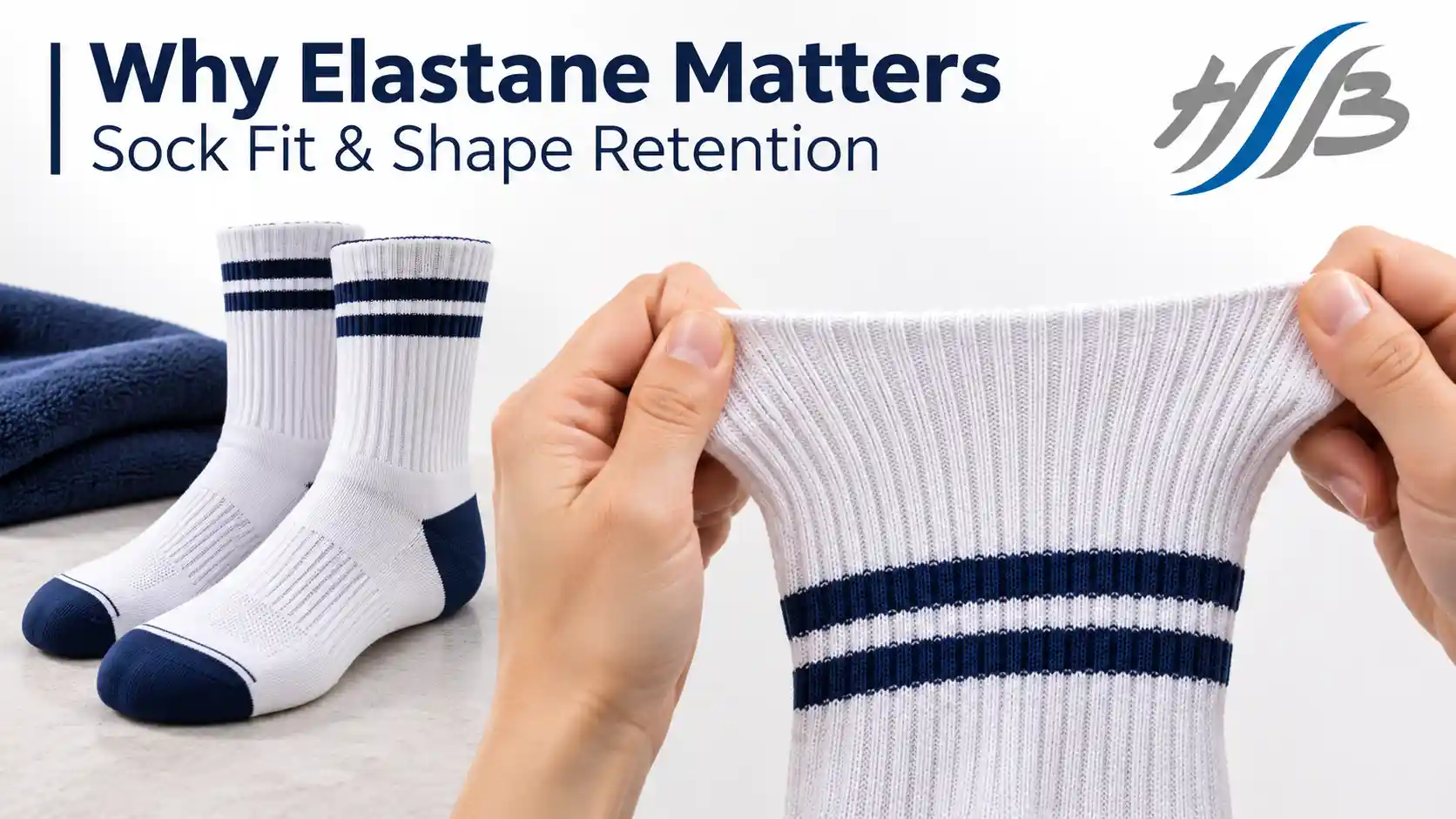
Elastane Matters in Sock fit and shape retention because it provides the stretch and recovery needed to keep socks comfortable and supportive. Although elastane makes up only a small part of most socks, usually 2% to 5%, it plays an important role in helping socks hug your feet, stay up on your legs, and return to their original shape after every wear and wash.
In this article, you’ll learn what elastane is, how it improves sock fit and shape retention, how much a sock needs, and what buyers should check when ordering from a socks manufacturer.
How Elastane Matters in Sock Fit and Shape Retention
Elastane is a man-made fiber known for its amazing stretch. It can stretch to five to seven times its own length and then snap back to its first shape. You may also know it as spandex (its common name in the US) or Lycra (a well-known brand name). All three names mean the same type of fiber.
In socks, elastane is almost never used alone. Instead, it is mixed with other fibers like cotton, nylon, polyester, or wool. Most often, it is wrapped with nylon or polyester to make a covered elastane yarn. This covering protects the elastane and makes it easier to knit.
You’ll usually see it at the end of the fiber label, for example: “80% cotton, 17% polyester, 3% elastane.”
Elastane Matters for Sock Fit and Durability
1. A Snug, Comfortable Fit
Feet come in many shapes. Elastane lets one sock size fit a range of feet. It stretches over the heel and then gently hugs the arch and ankle. This snug fit stops the sock from bunching up inside your shoe.
2. Socks That Stay Up
The cuff is where elastane matters most. A cuff with good stretch grips the leg without squeezing too hard. Without it, socks slowly slide down as you walk. Many makers add extra elastane in the cuff for this reason.
3. Better Shape Retention
Cotton fibers stretch out when you wear them, and they don’t always bounce back. Elastane pulls the knit back into place. This shape retention means socks look neat and fit well wash after wash, instead of turning loose and baggy.
4. Fewer Blisters
Loose socks rub and slide against your skin. That rubbing causes blisters. A close-fitting sock moves with your foot, which reduces friction. This is why elastane is so important in sports socks materials.
5. Arch Support and Compression
Some socks have a band of extra elastane around the arch. This band gives light support and keeps the sock locked in place. In medical and compression socks, higher elastane levels create steady pressure that helps blood flow. HSB also sources medical textiles for this kind of use.
How Much Elastane Do Socks Need?
The right elastane percentage depends on the type of sock. The table below shows typical ranges used by sock makers.
| Sock Type | Typical Elastane % | Why |
|---|---|---|
| Everyday cotton crew socks | 2–3% | Light stretch, soft feel |
| Dress and business socks | 3–5% | Smooth, close fit under trousers |
| Sports and running socks | 3–5% | Locks foot in place, cuts friction |
| Ankle and no-show socks | 3–6% | Stops slipping off the heel |
| Kids’ socks | 2–4% | Easy to pull on, gentle cuff |
| Compression socks | 10–30% | Steady pressure for blood flow |
For most everyday socks, 2% to 5% is the sweet spot. It gives enough stretch for comfort without making the sock tight or hot. To see how elastane works with other fibers, read our guide on tennis socks vs regular sports socks.
What Happens With Too Little or Too Much Elastane?
Getting the balance right is key. Both extremes cause problems.
Too little elastane (under 1–2%):
- Socks slide down and bunch at the ankle
- The heel pocket twists out of place
- Socks lose shape and look baggy after a few washes
Too much elastane (over 6–8% in regular socks):
- Cuffs feel tight and leave deep marks on the legs
- Socks trap more heat and feel less breathable
- Costs go up without adding real comfort
The best socks use just enough elastane in the right places. Good makers often place more in the cuff and arch and less in the foot. This smart placement gives a better fit than simply adding more stretch everywhere.
How to Make Elastane Socks Last Longer
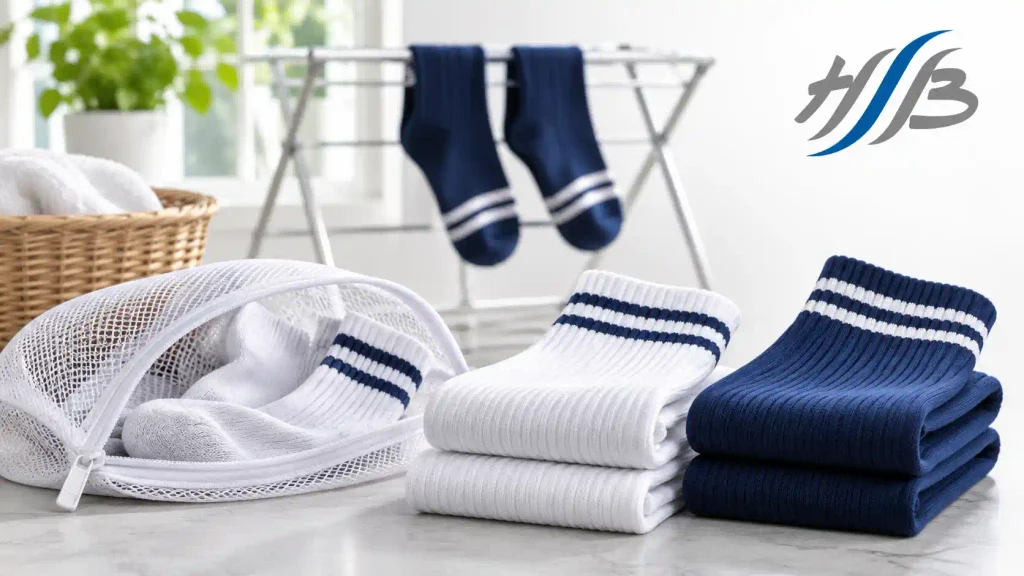
Elastane is strong, but heat and harsh chemicals can break it down. Follow these simple care tips:
- Wash in cool or warm water, not hot.
- Skip the bleach. Chlorine weakens elastane fibers quickly.
- Air dry when you can, or use a low dryer setting.
- Turn socks inside out before washing to reduce rubbing.
- Avoid too much fabric softener, which can coat fibers and reduce stretch.
With good care, quality elastane socks can keep their fit for many months of regular wear.
Tips for Bulk Buyers and Private Labels
If you are ordering socks for a brand or store, elastane quality can make or break your product. Keep these points in mind:
- Specify the elastane type and percentage. Ask for covered elastane yarn and name the percentage in your tech pack.
- Choose trusted yarn sources. Branded or high-grade elastane keeps its stretch longer than cheap versions.
- Test stretch and recovery. Lab tests show how far a sock stretches and how well it returns to size.
- Do wash tests on samples. Wash samples 5 to 10 times and check for sagging or loose cuffs.
- Check cuff comfort. Make sure the cuff grips without leaving painful marks.
- Plan for sustainability. Elastane can make recycling harder. Learn more in our guide on recycled vs virgin yarn for socks.
Pakistan has a strong sock-making industry with access to high-quality cotton yarn and modern knitting machines. HSB Textile Sourcing offers sourcing, sampling, and quality control services to help buyers get the right stretch and fit. You can also browse our socks portfolio to see past projects.
Final Thought
Elastane may be the smallest part of a sock, but it does some of the most important work. It gives socks a snug fit, keeps them from sliding down, and helps them hold their shape over time. For most socks, 2% to 5% elastane is enough. Sports, no-show, and compression socks may need more.
Want to create socks that fit well and last? Contact HSB Textile Sourcing to discuss your specs, samples, and order needs.
Frequently Asked Questions
Is elastane the same as spandex and Lycra?
Yes. Elastane and spandex are two names for the same stretchy fiber. Lycra is a famous brand name for it.
Why do my socks keep falling down?
Usually, the cuff has too little elastane or the elastane has worn out. Heat from hot washes and dryers can also weaken it.
What percentage of elastane is best for socks?
For most everyday and sports socks, 2% to 5% elastane works best. Compression socks use much more.
Can socks have too much elastane?
Yes. Too much can make socks tight, warm, and uncomfortable. It can also leave marks on your legs.
Does elastane make socks less breathable?
A small amount has very little effect. Large amounts can trap some heat, which is why most socks keep it low.
Can HSB help me source socks with the right elastane blend?
Yes. HSB Textile Sourcing works with trusted sock makers in Pakistan and helps with specs, samples, testing, and shipping.