
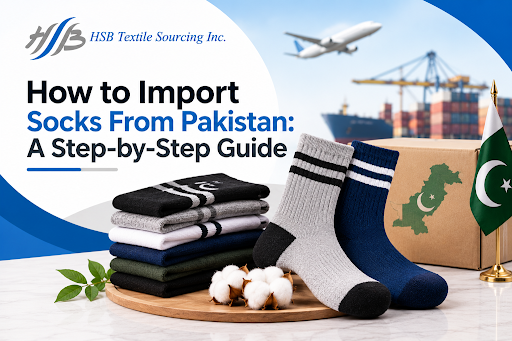
Importing socks from Pakistan can be a practical opportunity for retailers, wholesalers, private-label brands and e-commerce businesses looking for competitive textile sourcing options. But successful importing involves much more than finding a manufacturer and agreeing on a price.
You need to select the right sock type, verify suppliers, approve samples, understand pricing, establish quality standards, arrange shipping and prepare the necessary import documentation. In this guide, we’ll walk through the complete process of importing socks from Pakistan, with practical advice for both first-time and experienced buyers.
Why Import Socks From Pakistan?
Pakistan has a well-established textile and hosiery industry supported by cotton production, yarn manufacturing, knitting, dyeing, finishing and garment production. This gives international buyers access to a broad supply chain when sourcing socks and other textile products.
For buyers, sourcing from Pakistan can offer several potential advantages:
- Wide range of sock styles and constructions
- Access to cotton and blended yarns
- Custom and private-label manufacturing
- Experienced textile and hosiery manufacturers
- Competitive production costs
- Product development and sampling options
- Export-oriented manufacturing capabilities
- Ability to source multiple textile products from one market
However, the lowest factory price shouldn’t be your only consideration. Consistent quality, communication, production capacity, lead times and shipping arrangements can have a much greater impact on your total importing experience.
Step 1: Define Your Sock Product Requirements
Before contacting suppliers, create a clear product specification. A manufacturer can’t provide an accurate quotation or produce a consistent product if important details are missing.
Start by deciding exactly what you want to import.
Define the Sock Type
Depending on your target market, you may need:
- Crew socks
- Ankle socks
- No-show socks
- Sports socks
- Running socks
- Casual socks
- Work socks
- School socks
- Thermal socks
- Children’s socks
- Custom promotional socks
Include Product Details
Your specification should also include:
- Sizes
- Colors
- Designs
- Logo requirements
- Stitching or knitting details
- Heel and toe construction
- Elastic requirements
- Cushioning
- Labels
- Packaging
- Quantity
- Target delivery date
A detailed specification reduces misunderstandings and makes it much easier to compare quotations from different suppliers.
Step 2: Find Reliable Sock Suppliers in Pakistan
Once your requirements are ready, create a shortlist of potential sock suppliers in Pakistan. Look beyond online listings and evaluate each supplier based on their manufacturing experience, product specialization, capacity, quality systems, and ability to meet your specific requirements.
What to Check
Before selecting a supplier, consider:
- Manufacturing experience
- Product specialization
- Minimum order quantity
- Production capacity
- Sampling capabilities
- Yarn and material sourcing
- Quality-control procedures
- Export experience
- Lead times
- Packaging capabilities
Where possible, request product samples, company information, factory photos or videos, certifications, and relevant references before moving forward with a supplier.
Consider a Textile Sourcing Partner
International buyers may not have the resources to evaluate factories directly in Pakistan. A reliable sourcing partner can help identify suitable manufacturers, coordinate communication, and manage the purchasing process locally.
HSB Textile Sourcing Inc. supports overseas buyers with factory evaluation, product and sample development, price negotiation, production planning, quality inspections, reporting, and logistics coordination. With experience in Pakistan’s textile and hosiery sector, HSB helps make sourcing socks and other textile products easier for buyers without a local purchasing team.
Step 3: Request Quotations and Compare Suppliers
After creating your supplier shortlist, send the same product specification to each company.
This is important because comparing different specifications can make one supplier appear cheaper even when the products aren’t equivalent.
Ask suppliers to provide:
- Price per pair
- Minimum order quantity
- Sample cost
- Sample lead time
- Bulk production lead time
- Packaging cost
- Payment terms
- Shipping terms
- Production capacity
- Testing or certification costs
Don’t Choose the Cheapest Quote Automatically
A low quotation may reflect differences in yarn quality, construction, packaging, labour, testing or other specifications.
Instead, compare the total value of each offer.
| Factor | What to Compare |
| Unit price | Cost per pair based on the same specification |
| MOQ | Minimum quantity required |
| Material | Fiber composition and yarn quality |
| Sampling | Cost and development timeline |
| Production | Capacity and expected lead time |
| Quality control | Inspection process and standards |
| Packaging | Retail or bulk packaging requirements |
| Shipping | Incoterm and freight arrangements |
| Payment | Deposit and balance terms |
The goal is to identify the supplier that can consistently deliver the required product at a commercially sensible cost.
Step 4: Order and Approve Samples
Never move directly from quotation to a large production order without approving a sample.
The sample gives you an opportunity to confirm whether the supplier understands your requirements.
Inspect the Sample Carefully
Check:
- Size and dimensions
- Fit
- Stretch and recovery
- Yarn composition
- Fabric or knit density
- Stitching
- Heel and toe construction
- Elastic performance
- Color accuracy
- Logo placement
- Labels
- Packaging
- Overall appearance
If you provide the supplier with a physical reference sample, compare the factory’s sample directly against it.
Don’t approve a sample verbally. Keep a record of the final specifications and approved version so there’s a clear reference during bulk production.
Step 5: Confirm Quality Standards Before Production
Quality problems are much easier to prevent than to correct after a container has left Pakistan.
Before production begins, establish measurable quality requirements.
Your specifications can cover:
- Material composition
- Size tolerances
- Color standards
- Stitching quality
- Elasticity
- Logo placement
- Packaging
- Labeling
- Acceptable defect levels
Step 6: Finalize Pricing and Payment Terms
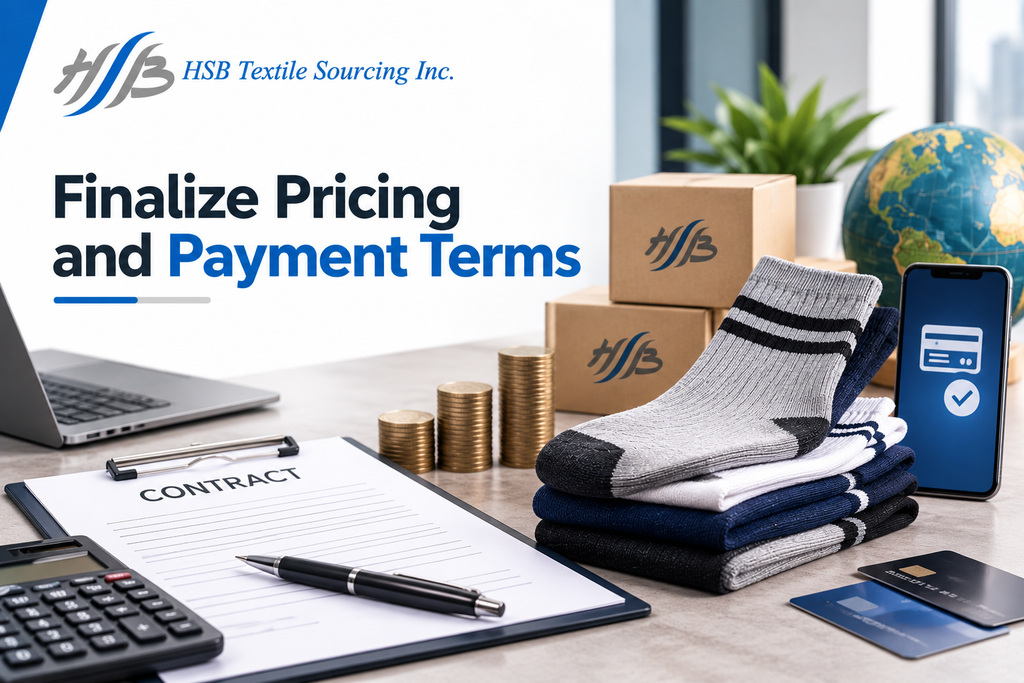
Once your sample and specifications are approved, negotiate the final commercial terms.
Your purchase agreement should clearly state:
- Product specifications
- Quantity
- Unit price
- Total order value
- Packaging
- Delivery schedule
- Payment terms
- Inspection requirements
- Shipping terms
- Required documentation
Step 7: Arrange Production and Monitor Progress
After the order is confirmed, production begins.
Don’t simply wait until the expected shipping date to ask about progress. Regular communication can help identify problems early.
Track:
- Raw-material availability
- Yarn approval
- Knitting progress
- Dyeing or finishing where applicable
- Branding and labeling
- Packaging
- Quality inspection
- Final quantity
- Cargo readiness
For international buyers, having someone locally monitor production can reduce communication delays and provide better visibility into the order.
Step 8: Prepare Shipping and Export Documents
Once production is completed and the goods pass inspection, the shipment needs to be prepared.
Depending on the transaction and destination, commonly required documents may include:
- Commercial invoice
- Packing list
- Bill of lading or airway bill
- Certificate of origin where required
- Export documentation
- Product-specific certificates or test reports where applicable
Exact requirements depend on the importing country, product classification, shipping method and applicable regulations.
Step 9: Handle Customs and Import Requirements
This is where buyers need to pay particular attention.
Your socks will need an appropriate customs classification and the importing country may apply duties, taxes, labeling rules, testing requirements or other regulations.
Before placing the order, check the requirements with your country’s customs authority or a qualified customs broker.
Your Import Cost Is More Than the Factory Price
Your landed cost may include:
- Product cost
- Packaging
- Inland transportation
- Export charges
- Freight
- Insurance where applicable
- Customs duty
- Import taxes
- Customs clearance
- Port charges
- Local delivery
Understanding the complete landed cost helps you determine whether the product will actually be profitable in your market.
Why Work With HSB Textile Sourcing?
Importing socks from Pakistan can involve managing suppliers, samples, production, inspections, shipping, and documentation from overseas. This can make the sourcing process challenging without reliable local support.
HSB Textile Sourcing Inc. provides sourcing and buying-house support, including factory evaluation, product development, sample coordination, price negotiation, production monitoring, quality inspection, reporting, and logistics. The company also supports other textile categories, helping buyers coordinate socks, apparel, towels, bed sheets, cotton yarn, denim, and more through one sourcing partner.
Final Thoughts
Learning how to import socks from Pakistan starts with a clear sourcing process. Define your product specifications, evaluate suppliers, compare quotations, approve samples, set quality standards, monitor production, and calculate the complete landed cost before placing a bulk order.
Pakistan’s established textile and hosiery industry offers diverse sourcing opportunities for international buyers. HSB Textile Sourcing. can support sock importers with supplier evaluation, sampling, production monitoring, quality inspection, and logistics coordination, helping make the sourcing process more efficient and reliable.
FAQs
Can I import socks directly from Pakistan?
Yes, international businesses can source and import socks from Pakistani manufacturers and exporters. Buyers should verify the supplier, agree on product specifications, arrange shipping and comply with their country’s customs and import requirements.
How do I calculate the total cost of importing socks?
Start with the factory price and add packaging, inland transportation, freight, insurance where applicable, customs duties, taxes, clearance charges, port fees and local delivery. The result is your approximate landed cost.
Should I order a sample before importing socks in bulk?
Yes. Always approve a sample before placing a large production order. It allows you to verify the material, size, construction, colours, branding, packaging and overall quality.
How long does it take to import socks from Pakistan?
The timeline varies depending on product development, sampling, order quantity, production capacity, inspection, shipping method and destination. Confirm a detailed production and shipping schedule with your supplier before placing the order.